What is the great mystery of your life?

“What is the meaning of life?” may be the great unanswerable question of the universe, but each of us, in our own lives, every so often has been confronted by a humbler mystery that is just as befuddling. It could be something as emotional as “Why did he/she break up with me?” Or as profound as “What is my place in the world?” Or as baffling as “Why did this person just disappear out of my life?” Or as mundane as “Why didn’t the bus stop?”, “Why didn’t I get my promotion?”, or “Why won’t this computer work properly?” Every day, in every situation, mysteries large and small surround us, adding a dash of intrigue into our routines.

Perhaps once or twice in a lifetime, a mystery comes along that isn’t just a matter of philosophical debate or human nature, but a genuinely strange occurrence. Something that arrests you, that haunts you, that makes you go “Hmm…” A tragedy that sends you reeling and makes you ask why, no matter how futile the question seems. You witness an event that defies not only description, but all understanding. You become obsessed with something that seems insignificant to others, but which nags at you for days, weeks, years, until you find yourself manically searching Wikipedia at 3am and using your spare time to visit your local university library.

Thankfully, there’s now a podcast for that! The intrepid Starlee Kine created and hosts The Mystery Show, in which people write to her about mysteries great and small, and she plays amateur detective. And gets results! In its first season alone, Kine solved six mysteries, some of which appeared so obscure and improbable at the outset–“Did Britney Spears read this book that I wrote that she was pictured with one time?”–that you couldn’t help but wonder how she would possibly go about solving them. I promise that she does solve each and every one, but, as usual, it’s the journey, not the destination, that fascinates. Kine is almost supernaturally curious, and has never met an interview subject she can’t mine for gold. Even when those nuggets don’t pertain to the case itself, they still dredge up something profound about the person, their life experiences, their dreams, their worldview. It’s a frothy show that has more depth and richness the more you consume it.

Of course, everyone who listens to the show asks themselves what mystery they would like solved if given the chance, and I’m no different. It’s not often that the opportunity comes along to ponder the great mystery of your life and, being a diehard mystery buff in my own right, the answer came to me easily. So, Starlee, if you’re reading, here goes…

When I was 16 years old, my parents packed me and my younger sister off on a two-week, school-sponsored trip to Italy and Greece. Even though I didn’t want to go (What can I say? I was a wallflower), I ended up having the time of my life. It was one of those trips where you really grow up and learn a lot about yourself, as well as have a succession of firsts. Not to mention your first taste of real freedom, of what life will be like once you’re out from under your parents’ shadow.

Our French teacher Mme M organized the trip, and let’s just say she was a bit laissez-faire when it came to keeping an eye on us. My father was perhaps more right that I’d care to admit when he came home from the first planning meaning and decreed that we would not go because she’d committed the crime of wearing spandex.  (My mother had the final word, thank goodness.) All this to explain how we ended up in one of Frankfurt’s major parks at 2am, trying to get into what I now understand was a fetish club.

It was our last night in Europe. We’d stopped in Germany just for that night because the flights didn’t work out to take us directly home from Athens. Tired and a bit exasperated with my companions, I left them for reasons I don’t really remember to go back to the hotel and get some sleep. As I walked along the sidewalk parallel to the park, but on the opposite side of the street from it, I saw a couple walking erratically just outside the treeline. At first, I wasn’t sure whether they were fighting or just being playful. Then I heard the woman scream.

The man she was with tried to pull her inside the park, but she fought him. I stopped to watch, but I wasn’t sure what was going on. Were they really fighting, or just horsing around? Did they know each other, or had he just jumped her? Was she screaming, or squealing with laughter? I couldn’t tell, but my sixth sense told me something was wrong. I looked around for some way to call the police or alert someone who might help, but I was in a foreign country on a deserted street in the wee hours of the morning. I didn’t speak the language. I had no idea where in the city I was, or how to direct them, even if I could contact the authorities. I hovered, watching the couple, trying to decide what to do, until he did succeed in pulling her into the trees. I went back to the hotel, shaken, and tried to make sense of what I saw.

I still think about that woman to this day. Did I let her down? Should I have done more? Did my ignorance/youth/foreignness contribute to something horrible? Or was it all just typical adolescent aggrandizing, my overtired and overwrought brain inventing a story out of whole cloth? (Not like I became a writer or anything…) Memory is fallible, and so am I.

Regardless, I’ll always wonder what really happened in the park that night (other than a bunch of my friends getting drunk on cheap wine). Just like so many other mysteries in our lives, I’ll carry this one with me forever.

So what is the great mystery of your life? Don’t be shy to share a tale or two in the comments, and check out The Mystery Show!

-Selina
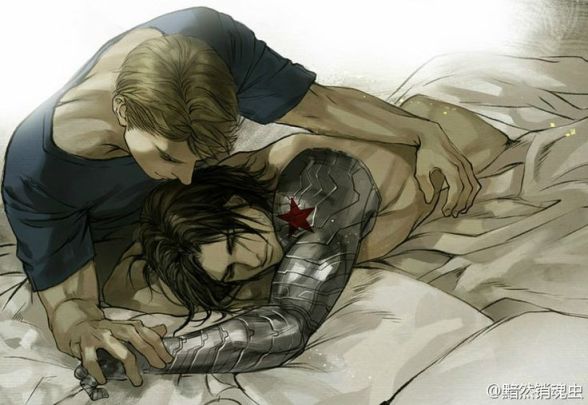
“Oh, just make out already!” Why genre cinema needs to go there, and soon, in the #Stucky era

Four score and many moons ago, I wrote my graduate dissertation on, I kid you not, “Homosociality and the male anti-hero in A Clockwork Orange and Romper Stomper”. Inspired by the theories of Eve Kosofsky Sedgwick, I argued that in both of those films, the male leads were repressing their homosexual desires and/or more  stereotypically feminine aspects by exaggerating their macho behavior. That their hyper-masculinity was as much a performance as personality trait, there to mask desires and behavior that weren’t socially acceptable at the time. Both of those films are quite avant-garde, making the homosocial aspects of their lead characters’ relationships with their friend(s) explicit, but falling short of making this subtext text. Give the eras in which both films were made and the filmmakers involved, this is hardly a surprise.

But, as my new Prime Minister recently said, “It’s 2015,” and at least some of the recent/upcoming bromances need to become genuine onscreen romances.

VF

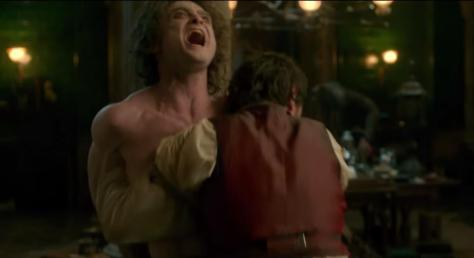
This fact was underlined by two recent pop culture events: the releases of Victor Frankenstein and the Captain America: Civil War trailer. In the former, a gonzo steampunk reinvention of the Frankenstein story, Daniel Radcliffe plays a brilliant but innocent young Igor as a Dickensian waif with mad surgical skillz. He is rescued from near-enslavement by dashing James McAvoy in Byronic mad scientist mode. The most compelling thing about the film is the chemistry between the two, as Victor seduces–though not literally–young Igor into helping him with his experiments, then turns on him when Igor grows a conscience. The best scenes in the film are where they banter, flirt, fight, share intimate details about their lives, nerd out over science. It’s a romance in everything but name.

There is, of course, the obligatory love interest (for Igor–Victor is far too self-absorbed to notice anyone not of use to him). Since she’s the typical girlfriend character, she’s boring and pointless, there to get injured and be saved, criticize Igor when he makes poor life decisions and support him when he finally decides to do the right thing. But how much more interesting would she have been if she was not there merely to support the lead, but was a participant in their activities as a platonic friend and character of equal merit. And the dramatic stakes of the film would have increased tenfold if Igor was scared he was losing not just a friend and employer in Victor, but his lover to ambition and madness.

Kosofsky Sedgwick derived her theory of the homosocial in part from 19th century novels, where the two male rivals for a woman’s affections would be the most well-defined characters, to the point where the beloved they were fighting over became superfluous. Given how women are still marginalized in modern cinema, especially in genre cinema, couldn’t we redefine both male and female roles by freeing women from the ‘girlfriend’ part and giving them more agency, and deepening the male relationships by having them actually be in one?

stucky61.gif

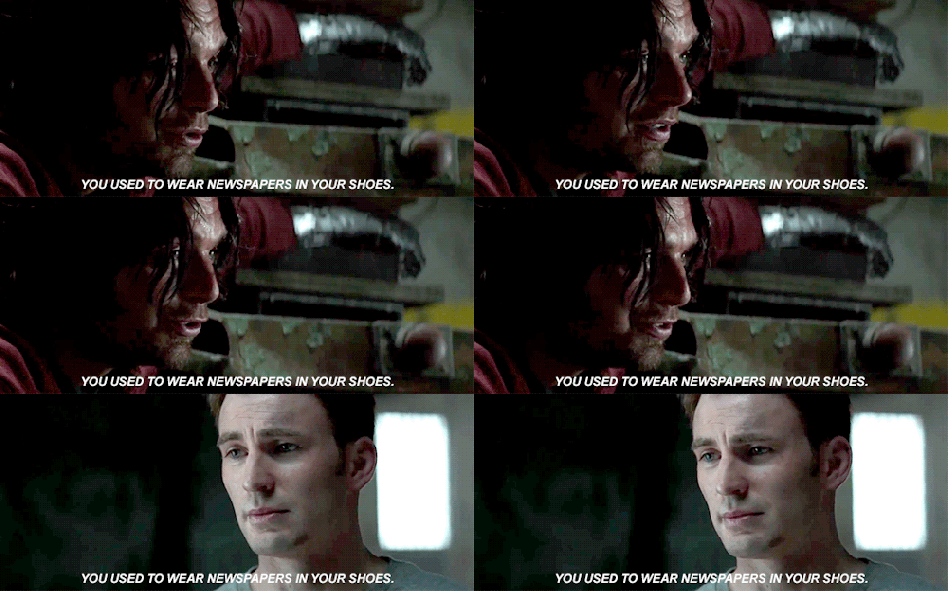
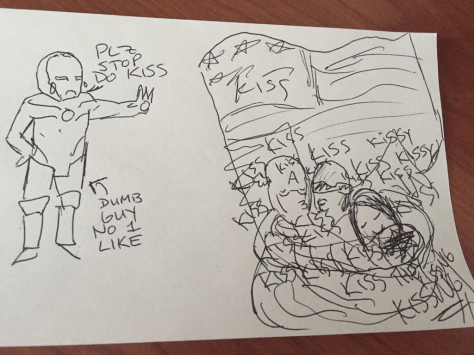
A significant portion of the audience is already clamoring for it. After the Captain America: Civil War trailer hit, highlighting Cap’s efforts to save his old friend Bucky from both friends and foes who want his head on a pike, the online response basically amount to: “Please, please, please, can they make out?” As beautifully illustrated in this sketch by @hunktears:

CapCWsketch.png

And amazing articles like this:  http://comicsalliance.com/super-stucky-steve-bucky-civil-war-trailer/ In it, Andrew Wheeler argues that:

“Yet if Bucky Barnes were a woman, this would be a love story, played out with all the same narrative beats. If Peggy were the brainwashed assassin kept frozen through the decades, this movie would definitely end in a kiss. Everything about the love, pain, and intimacy of the Steve/Bucky relationship on the big screen is typical of a romance, and that’s something fans are right to respond to — something the filmmakers may even be playing into, though surely not with any formal sign-off from Disney.

The world is increasingly more free, fair and tolerant for people in same-sex relationships, especially in countries like the US. Yet imagine this; if we lived in a world that had no hang-ups about same-sex relationships, no hate, no prejudice towards the idea of two men or two women together; do you doubt for a second that this movie would actually be a romance?

If everything else about this movie were the same, but we were different, wouldn’t it make sense for Steve and Bucky to kiss?”

It does make sense, and we are ready for it. (And, for my money, the filmmakers are deliberately playing on this in the trailer.) Who is Captain America’s romantic foil if not Bucky? They are the only two people in existence who have lived yin-yang versions of the same experience, who have fought each other and have died for each other, have been friends, comrades, enemies, and saviors, have a deeper connection than any two other characters in the MCU… so explain to me why they can’t be lovers. There isn’t even a token love interest standing in their way. Cap’s entire argument in this trailer seems to be, “Bucky is my friend, so don’t you dare lay a finger on him.” [Note: the details of the disagreement between Cap and Iron Man are undoubtedly more complex than this in the actual film, but this trailer is keeping those secrety secrets hidden, and for good reason.] It’s very Captain American to go to impossible lengths for friendship. But think of how much more powerful it would be if he went to war with his friends for love.

Film after film, it’s there in the subtext. It’s time to take a risk and turn these homosocial relationships into homosexual relationships. Why can’t Bucky and Steve be lovers? Why isn’t the new twist on Frankenstein that Victor and Igor have a tryst that turns tricksy? Why can’t Batman have given Robin a home because they have similar backstories *and* he has a thing for twinks? Why can’t Trish Walker be Jessica Jones’ ex-girlfriend, creating a love triangle between the two of them and Luke Cage? (Hands up who wants to see that threesome do a love scene!) Why can’t Jessica Chastain try to seduce Mia Wasikowska away from Tom Hiddleston, or want them both, in Crimson Peak? Why can’t The Vision be a trans or intersex character in Avengers: Age of Ultron–in fact, why does The Vision have a gender at all?

It all comes down to the same question, the one more and more people are demanding of their genre cinema: why aren’t there more queer characters, queer stories, queer superheroes and aliens and vampires and witches and shape-shifters and zombies and Gothic heroes/heroines?

Why isn’t there more queer representation in genre cinema?

Because, filmmakers, you subtext is showing.


[Note: Artist’s name for the top image of Steve and Bucky in bed is in the bottom of the frame. This is not my drawing, and I take no credit for it. If you know who the artist is, please contact me.]

Spotlight on Humbug and Author Interview with Joanna Chambers!

Dear Friends,

I have an extra-special pre-Christmas treat for you all today, an interview with none other than the extraordinary Joanna Chambers, author of one of my favorite M/M historical trilogies, the Enlightenment series. She’s here to promote not one, not two, but three new projects, with a spotlight on her first venture into self-publishing, Humbug! So join me in welcoming her, and read on to find out more about her sparkly Christmas story…

Welcome, Joanna! To start off, tell us a little about yourself and how you got into writing. Unlike a lot of M/M authors, you’ve also written M/F before. How did that transition come about?
It’s a cliché, but I always wanted to write. As soon as I could read, really. It took me a while to figure out what to write (romance), and then a little longer how to write it (sincerely). I’d had a brief but intense love affair with romance as a teenager, then read none at all for years and years. I rediscovered it in my early 30s as a new mother after years of reading miserable literary fiction that left me vaguely unsatisfied. 😉
My writing passion tends to follow the cycle of my reading passion plus approx. 2 years. So, when I was publishing M/F historicals, I was reading M/M historicals. I’m a massive glommer. When I love something, I tend to devour it to the exclusion of everything else (once went a whole year listening to nothing but Bob Dylan), and I’ve read pretty much exclusively queer romance for the last 5 years–this year mainly contemporary. I don’t honestly see that changing anytime soon, but it could do. I’d never rule out a return to M/F at some point, but I have to feel some degree of passion for whatever I’m working on.
So I guess the logical question is: What were you reading two years ago? And will we be seeing any contemporary books from you after this set of releases (I’d love to see what you’d do with an M/M romance legal thriller, since that’s your background)?
I kind of started on my (current) contemporary queer romance kick two years ago, and, yes, there is a contemporary novel planned–part of something bigger (and currently under wraps)… I don’t see any legal thrillers in my future though. I’m not a fan of those really. Never say never though.
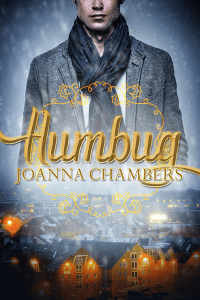
You’re spoiling us with not one, but three releases in the space of a month, and all just before Christmas. You must feel a bit like Santa  Claus. Tell us about Humbug. (Exceptional cover, BTW.) What about A Christmas Carol made you think it was ripe for an M/M twist, and how did you go about re-interpreting the classic?
I totally love the cover. It’s a contemporary retelling of A Christmas Carol, and I feel like Natasha Snow’s design captures a feel of the original as well as the contemporary vibe.
My Scrooge character is Quin Flint (aka Skinflint), a workaholic management consultant who specialises in downsizing. I had a lot of fun writing this story, figuring out equivalent characters for Marley’s ghost, Bob Cratchit, Tiny Tim, and a few other, more minor characters that aficionados of the original will recognise. Plus, on top of that, I’ve added a romance component. I love this story a lot actually–I really hope readers will too.
JC1
You also have a Christmas story in a charity anthology this year. How did that come about?

I’m really pleased to be doing another charity antho with Susan (Lee of Boys in Our Books) this year, particularly since I love Christmas stories–I literally can’t get enough of them. My contribution is a (pretty heavily) revised version of a story I published under another name a few years ago, “Mr Perfect’s Christmas.” The rights reverted to me a few months ago, so the timing was great.
I loved Another Place in Time, so I can’t wait to dive into the new anthology. Can you tell us a little bit more about it, and what charity the proceeds go to?
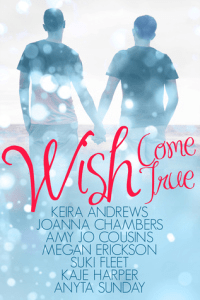
It’s called Wish Come True and it’s the lovely Susan Lee’s baby (as was Another Place in Time). However, whereas APIT was historical stories, WCT is contemporary NA. My fellow authors are fab: Kaje Harper, Megan Erickson, Anyta Sunday, Amy Jo Cousins, Keira Andrews, and Suki Fleet. All proceeds go to Lost-N-Found Youth, an Atlanta-based non-profit corporation whose mission is to take homeless lesbian, gay, bisexual, and transgender youths to age 26 off the street and transition them into more permanent housing. So, a very worthwhile cause.
I personally love Christmas anthologies–there’s something about the holidays that just lends itself to shorter tales, kind of like a box of chocolates or presents under the tree. Do you prefer writing these shorter stories, or the breadth and depth of a novel?
I like both. I like the palate cleansing you get from writing a shorter story after working on a longer piece for months and months–it’s energising. But I like the challenge of the longer form, too. My first novel was over 90k and my second 75k ,but since then, most of my novels have clocked in at about 60k. That feels like quite  natural length for me to write. And about 20k for a novella.

JC2

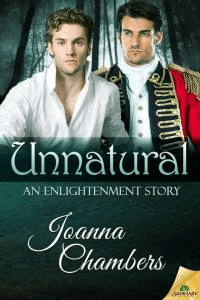
Speaking of novels, I cannot wait to dive into Unnatural, which is sort of a companion book to your Enlightenment series. I certainly understand the impulse to stay in that world–the trilogy is easily one of my favorite M/Ms of all time. What about Iain’s story drew you back, and is this a start of a new trilogy? Can we expect more companion books?

There’s an origin story that I’ll be blogging about separately; however, in a nutshell, Iain started off as one of those characters that I think of as human furniture–he was initially created literally just to stand next to Murdo in a scene in book 2, but once I’d described him in his scarlet uniform with his moustache and his glinting smile, I found myself writing him into another scene, then another. Then he got a small but significant role in my freebie short, “Seasons Pass” (set between books 1 and 2), which is where James gets his first appearance. After that, writing their story was inevitable…

I’ve not got any more Enlightenment books planned at this point. I could see myself possibly writing a short about Kit Redford (the owner of the club in “Seasons Pass”) at some point though. 🙂

Just a couple of fun questions to finish things off. So if you were visited by a ghostly presence in the middle of the night, would you prefer it to be the Ghost of Christmas Past, Present, or Future, and why? (I’ve just noticed that that aspect of Humbug ties in nicely with your Somnus series, actually.)

Probably the Ghost of Christmas Past. Christmas is a time of nostalgia after all. I wouldn’t mind revisiting some of those exciting childhood Christmases. 🙂 And yes, I do seem to write about sleeping–and Christmas–a lot!

Finally, let’s play a romance version of a game we’ll call “One Night Stand, Long-Term Relationship, or HEA”. Of all of your characters, which one would you want to a) have a one-night stand with, b) have a long-term relationship (that ends in a breakup) with, or c) live happily ever after with?

Great question! My one night stand would be probably be Iain Sinclair from Unnatural because–hello, moustache! (My love of facial hair significantly pre-dates the rise of the hipster. I used to have a regular piece at my old reader blog called “Tash or Slap” in which I posted a picture of man with a tash and another wearing make up and invited my readers to vote on their favourite. Example here).
My long term relationship might be… Cam McMorrow from “Rest and Be Thankful” because we’re very alike and I think we’d have a lot in common. But ultimately (sob) we’d break up because we’re too alike.
My happily ever after is easy–Murdo Balfour. He seems all high-handed and arrogant, but really he’s a nurturer. So he’d be fabulously alpha in bed then bring you a cuppa tea after.

And that’s a wrap! Huge thanks to Joanna for stopping by and treating us to some time with her! Readers, who would your choices be for a ONS/LTR/HEA from among Joanna’s characters? Hit us up in the comments, and enjoy her holiday releases.

______________________________________________________
Bio
Joanna Chambers always wanted to write. In between studying, finding a proper grown up job, getting married and having kids, she spent many hours staring at blank sheets of paper and chewing pens. That changed when she rediscovered her love of romance and found her muse. Joanna’s muse likes red wine, coffee and won’t let Joanna clean the house or watch television.


Blurb

Quin Flint is unimpressed when his gorgeous colleague, Rob Paget, asks for extra time off at Christmas. As far as Quin is concerned, Christmas is a giant waste of time. Quin’s on the fast track to partnership, and the season of goodwill is just getting in the way of his next big project. But when Quin’s boss, Marley, confiscates his phone and makes him take an unscheduled day off, Quin finds himself being forced to confront his regrets, past and present, and think about the sort of future he really wants…and who he wants it with.

Spotlight: IZ Adaptive Couture for Wheelchair Users

Thanks to the wonderful folks at the Marilyn Denis Show, I recently found out about an amazing Canadian fashion designer named Izzy Camilleri, who has created the world’s first, and so far one of the only, fashionable clothing lines tailored specifically to the needs to wheelchair users, IZ Adaptive. This is one of those ‘duh’ ideas that you don’t realize is so obvious, so needed, and so wonderful until you hear about it–of course people who are seated all day, every day will need special kinds of clothes, which take into account some of the health issues that surround lack of mobility.

These can range from pressure sores and organ settling to circulation and bladder issues. Something as seemingly innocuous as pockets on the back of jeans can cause sores that might take a seated person almost a year to recover from. More companies are recognizing the need to get into the adaptive clothing game, but, in this regard, Camilleri is a true trailblazer.

Camilleri used to do fashion editorials for the likes of Angelina Jolie and David Bowie. Her work has appeared in Vogue. But when, in 2004, a wheelchair-using journalist approached Camilleri about designing a cape for the winter, the experience proved inspirational, and the idea for IZ Adaptive was born. But you should hear it from her:

It would take five years for her to open her online store. She also has a studio in Toronto where you can view clothes by appointment. Ten percent of all proceeds from sales of her designs go to building access ramps in communities across North America. There’s also a T-shirt you can buy here, 100% of the proceeds of which go towards their “mission of making the world a more accessible place.”

The best thing about her women’s and men’s lines is that Camilleri makes, as Kate Matelan from New Mobility magazine noted, “on-trend fashions that don’t necessarily look adapted.” Everybody should have access to clothes that make them look fabulous, and with Camilleri’s team’s special adaptations, which she honed from working with wheelchair users for over a decade, they can. (The web site ships internationally.) As Camilleri herself notes in Matelan’s piece: “I always say the clothes are secondary to what they deliver. They offer a sense of self, personality, dignity. They’re more than just an article of clothing.”

Please help me get the word out about IZ Adaptive. And if you know of any wheelchair users looking to spice up their wardrobe, send them Camilleri’s way: http://www.izcollection.com. Because Fashion IZ Freedom!

The Virtues of Pleasure-Delaying

This Saturday, I’m going to do something momentous. It’s my birthday, one of those big birthdays with a zero at the end of it. In the spirit of such a major transition—a new decade, another era of adulthood—I’m giving myself permission to read the fifth and final book in the Adrien English mystery series by Josh Lanyon. I read the others over the course of three months about… oh, four years ago. But I’ve saved the last one for a special occasion, and this one’s it.

I didn’t know when I relegated it to my eReader’s backlist that I wouldn’t pick it up for another four years. At the time, I just didn’t want the story to end. The fourth book in the series, The Death of the Pirate King, brought Adrien and Jake to a really good place as a couple, in my opinion, and I wasn’t ready to deal with another round of misunderstandings and rupture, of Jake distancing himself from Adrien and Adrien playing detective to compensate. I love these characters to the very marrow of my bones, and even though I was fairly certain of a happy ending, a happy for now was good enough for me.

Why, you might ask? Well, because I’m an avowed pleasure-delayer.

When I saw the flaming turd of cinematic excrement that is Cameron Crowe’s adaptation of Vanilla Sky, I had a mini-epiphany when Tom Cruise’s character explains the concept of pleasure-delaying as applied to relationships: keeping things casual until the absolute breaking point. That’s certainly one way of slowing things down where sex is concerned, but I’ve applied that principle to all aspects of my life. I’ll hurry and buy a book on the release date, only to read it four months later. I love watching television shows when they air and thinking about it for the rest of the week, until the next episode. I always feel an acute sense of withdrawal after a much-anticipated event takes place, so much so that I sometimes feel it’s more fun to savor the idea that the U2 concert, say, is one year/three months/two weeks away than the fleeting bliss of being at the concert. Because once it’s over, it’s over, no matter how much fun you had while it was happening.

In our binge-happy culture, I think there’s something to be said for taking your time and appreciating what you have while you have it. Imagining what it might be, the future plotlines or occasions ripe with potential. As a writer, I relish the impact a good cliff-hanger can have on the reader (sacrilege, I know). As a reader, the idea that there’s still another adventure with these beloved characters awaiting me is reassuring. As a viewer, I enjoy unpacking an episode with other fans or reading reviews the following day. To my mind, a book/show/event is only great if it’s worth waiting for.

But there is a flipside: the over-long delay. There is an art to pacing things out, hitting that moment of peak anticipation without lurching over into lethargy. We all have those episodes of once-loved shows we’ve abandoned on our DVRs. I daresay the makers of Sherlock had that in mind when they conceived of this year’s Christmas special. Or, worse, angering your most fervent fans. I certainly don’t advocate that writers wait four years to publish a sequel to a beloved series of books (*cough*, Captive Prince, *cough*). There are cliff-hangers, and then there’s trying your readership to the breaking point.

In our insta-culture of more, now, next, I believe there’s something to be said for taking things slow. Think of your relationship with your favorite piece of pop culture like a love scene. We all like a little bit of wham, bam, thank you, ma’am, every once in a while, but doesn’t a slow-burn approach resonate more? Aren’t the best love scenes those ten-pagers, where the author has complete control of her characters’ bodies and emotions, at the end of which you feel as if you’ve been rode hard and put away wet?

Even though I’m starting the fifth Adrien on Saturday, I’m still going to try to string it out. If I’m really good, it’ll last a week. But I’m under no illusions as to what’s going to come after: withdrawal. Sadness. A sense of completion.

Until I find my next obsession…

Help Celebrate Queer Romance Month!

QRMstories

October has always been a triple-threat for me, the best month of the year: Canadian Thanksgiving, my birthday, and Halloween. It’s a month of gratitude, of celebration, of transformation. Of watching the leaves change color and howling at the moon. And for the second year in a row, October plays host to one of my favorite theme parties, Queer Romance Month!

What is Queer Romance Month, you ask? I’ll let them explain it to you.

Well, what is it – Queer Romance Month is a month long celebration of romance across the LGBTQ+ spectrum. Every day in October, we publish three to four posts from a variety of readers, writers, bloggers and other brilliant people. Our contributors come from all corners of Romancelandia, united by our belief that love is love, romance is romance, and sexuality is not a sub-genre.

On the website, we’ll be showcasing essays, think pieces, flash fiction, and other good things inspired by this year’s theme: We All Need Stories.

You’ll also find us around the blogosphere all month long, bringing you exclusive interviews, audio clips and video readings from our wonderful contributors.

And who are those contributors, you might ask? Pretty much every big name in the game: Josh Lanyon, KJ Charles, Harper Fox, Santino Hassell, Alexis Hall, Anyta Sunday, JK Pendragon, Megan Erickson, Nicole Kimberling, (deep breath) Kaje Harper, RJ Scott, Charlie Cochet, Rhys Ford, Mary Calmes, Astrid Amara, Joanna Chambers, Alex Beecroft, and many, many more. There are essays that will tear your heart out. There are contests that will get your blood running. The site is truly an embarrassment of riches, and all to get a simple message out, that people are people, that love is love. We’re all just queer as folk.

Why do we need a Queer Romance Month? Turn on your local news. Because people of all colors, races, creeds, identities, orientations, and otherwise are being denied their rights. Because 40% of homeless youth are LGBTQ+. Because there are still places in the world where someone will kill you for being LGBTQ+. Because one of those places is the place where you live.

Stories give hope. The experience of being told a story is a primal one, fundamental to our identity as humans. When we stop telling stories to each other, when we stop sharing our diverse experiences, when we put up a wall to anyone who is different than we are, we lose something as a species.

Imagine if the only “crime” you’d committed was to be born the way you are. Imagine if your government tried to deny you the right to love. Now imagine there was a group of people ready to share their stories, to reach a hand out to you, to help you feel less alone. That’s what’s being done here. Please help spread the word–and happy reading!

How to get involved

You can visit daily at www.queerromancemonth.com. Subscribe by email or add our RSS to your feed-reader of choice. Err, assuming people still do that. You can also follow us on Twitter at @QueerRomance, which will alert you when new posts go up.

You can also snag one of our gorgeous badges to display on your own site or use temporarily as a Facebook or Twitter icon to show your support of Queer Romance Month.

Tweet to us, leave us comments, enter our giveaways – we’re here to share our stories and we love hearing from people.

Summer TV Catch-Up: #iZombie, #MrRobot, #Sense8, #Transparent

Anyone who tries to tell you that this isn’t the Golden Age of Television needs to go back and watch all of those classic TV shows from the ’50s and ’60s with an objective eye. Not to say that there aren’t some gems—of course there are. But in an age where everything is an homage to something else, if not a soulless digital double, it’s easy to mistake nostalgia for quality. Which is not to say that today’s shows are any different—they can still be subdivided into the good, the bad, and the ugly—but with cable and streaming services constantly upping their game, the result is some spectacularly good TV.

Possibly too much. I’m a regular TV watcher—unrepentantly so, given the slim pickings at the multiplex these days—and even I can’t keep up with all the good stuff. And there is *so much* good stuff on TV these days: ambitious dramas, cutthroat fantasy, inspiring superheroes, auteurism at its best. If you would rather go see Furious 7 or Jurassic World than watch a season of [insert popular and critically acclaimed show here], then… you should probably go read some other blog. 😉

This quality TV glut is one of the many reasons I love the summer. Even though some channels have smartened up and started featuring original content in the summertime, mostly the powers that be might as well have a great big “Gone Fishin'” title card playing 24/7.

So once I had my fill of baking in the sun, I had time to catch up on four shows that I personally think are worthy of a few of your precious viewing hours. While they are far from perfect, each is fun, provocative, and egregiously entertaining, at least in my humble opinion.

izombie11280jpg-57aa66_1280w

iZombie

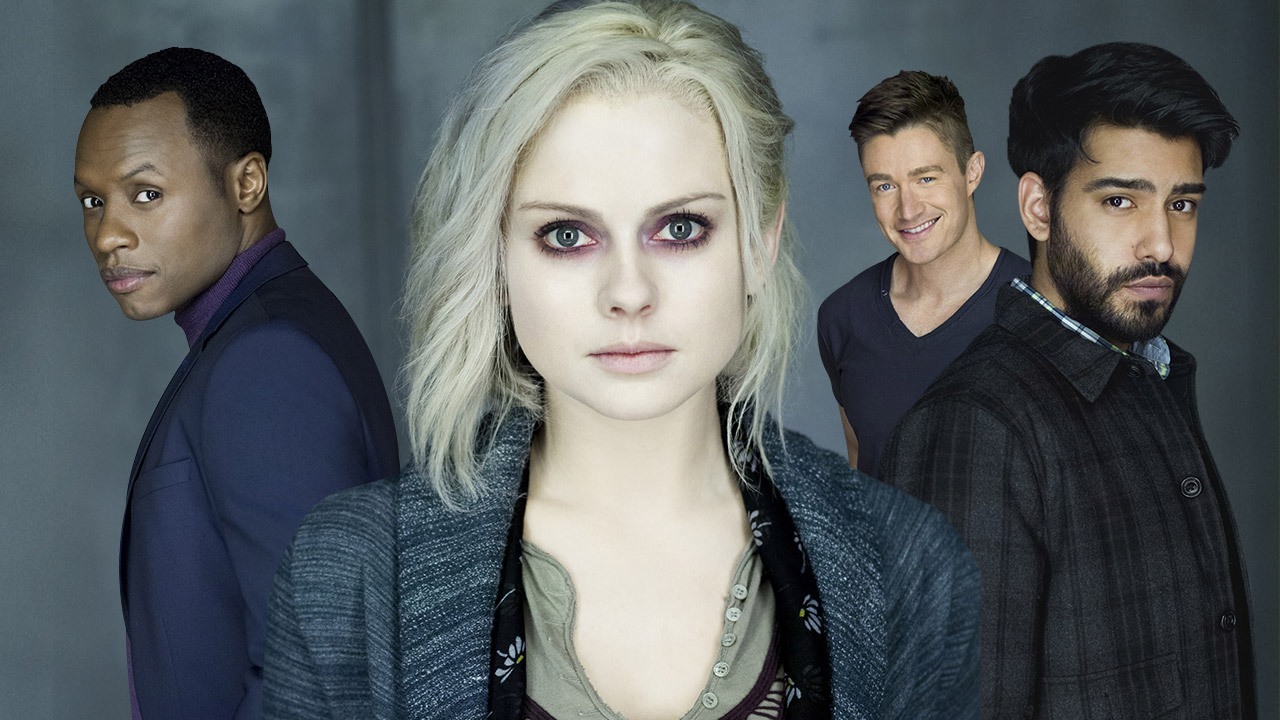
I resisted this one for a while, even though it comes from the creator of Veronica Mars, Rob Thomas. Mostly because I am zombied out. I also don’t like gross body horror stuff. But I should have known better since a) this is on network TV, so the brains and intestines are kept to a minimum, and b) Veronica Mars is one of my favorite shows of all time. The plot is about Liv, a promising med student with a hunky fiance and a great family life who goes to a party one night where there is a zombie attack. She gets infected and has to give up everything in her life to work at the morgue so she has a steady supply of brains, brains, brains. The brain she’s eating also gives her the personality of the deceased, which she uses to help solve their murder.

The procedural element is the weakest part of the show, since it’s the same case of the week structure that endless cop shows use, and it’s impossible at this point to bring anything new to that. But the serial aspects of the show won me over very quickly, mainly the stellar supporting cast. Also, the show never cuts corners in the suffering department. In the first season alone, each character is put through the ringer emotionally, and the writers always choose the most painful development for them. And all this with a ton of witty banter and just plain fun interactions. Liv taking on the personalities of the people she eats results in some side-splitting and heartbreaking interactions. Thomas, like with Veronica Mars, is committed to strong multicultural casting, and the best part of the show is her fellow mortician Ravi, who needs to be my boyfriend, like, now. Also great are David Anders as the big bad zombie Blaine and Robert Buckley as her ex-fiance Major Lilywhite (best name ever). The only character who didn’t quite hit for me is her detective partner Clive, partly because he isn’t aware that zombies exist, and therefore is kept out of a lot of the serialized aspects of the plot.

If you’re looking for a fun, fresh take on the zombie genre, or even just some witty banter, check out iZombie.

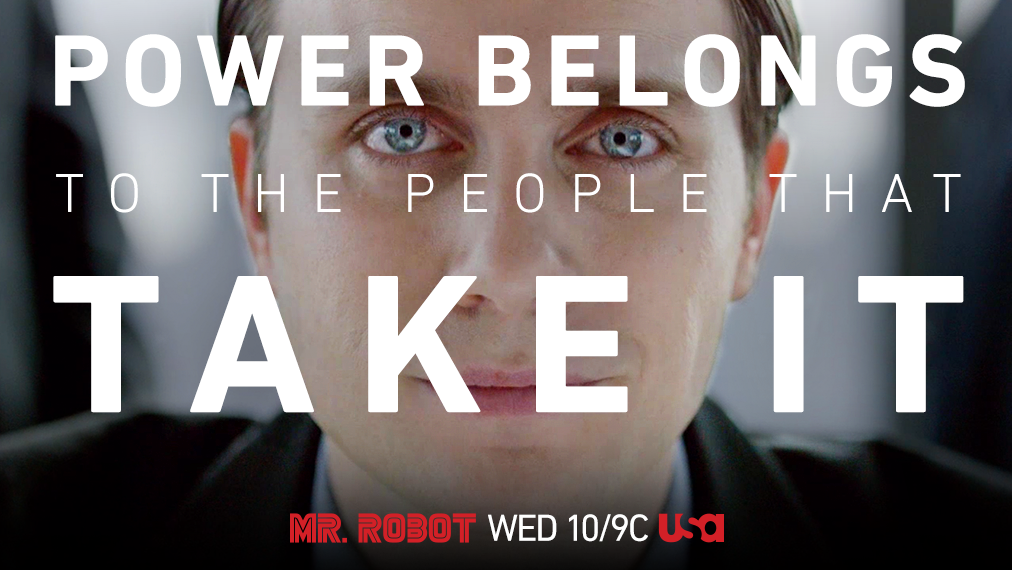
Mr_-Robot_USANetworks

Mr. Robot

And the award for the worst title of a new television show goes to…

A lot of factors kept me away from this one when it first started airing, but, wow, was I wrong. This is easily one of the best first seasons of a show I’ve seen in a long time, a cinematic pressure-cooker that had me holding my breath when not theorizing about what exactly is going on. In the tradition of ’70s paranoid cinema but with an up-to-the-minute take on technology and societal woes, this show evokes Kubrick, Fincher, and those nightmares you can’t wake up from.

Our unreliable narrator is Elliot, a mega-introvert who works at a tech security firm but who moonlights as a hacker Robin Hood, righting the wrongs in his environment through cyber blackmail. He nemesis is Evil Corps, an Apple/Google-esque company that controls, well, everything. He and his best friend Angela both lost their parents to cancer caused by Evil Corps’ negligence, so it’s no surprise Elliot gets in bed with fSociety, a group of hackers set on eliminating everyone’s debt by destroying the corporate infrastructure. The enigmatic Mr. Robot is their fearless leader… or is he? Elliot is the Alice in this tale, and as he steps through the looking glass, he discovers a whole other world, and parts of himself that he never expected. ‘Unreliable’ is the watchword here.

By the end of ten riveting episodes, every one of your expectations will be met while subverting all character tropes. Angela, Elliot’s friend, is a tigress in disguise. Sweet Shayla at first seems one-note, then turns into an aria. Menacing businessman Tyrell Wellick and his snobby wife at first seem like stereotypes of the up-and-coming business class, but prove far shiftier, and more human, than first expected. Then there’s Darlene, who just plain rocks. I can’t say more for fear of ruining the many, many surprises to come, but trust me, this is one roller-coaster you want to ride.

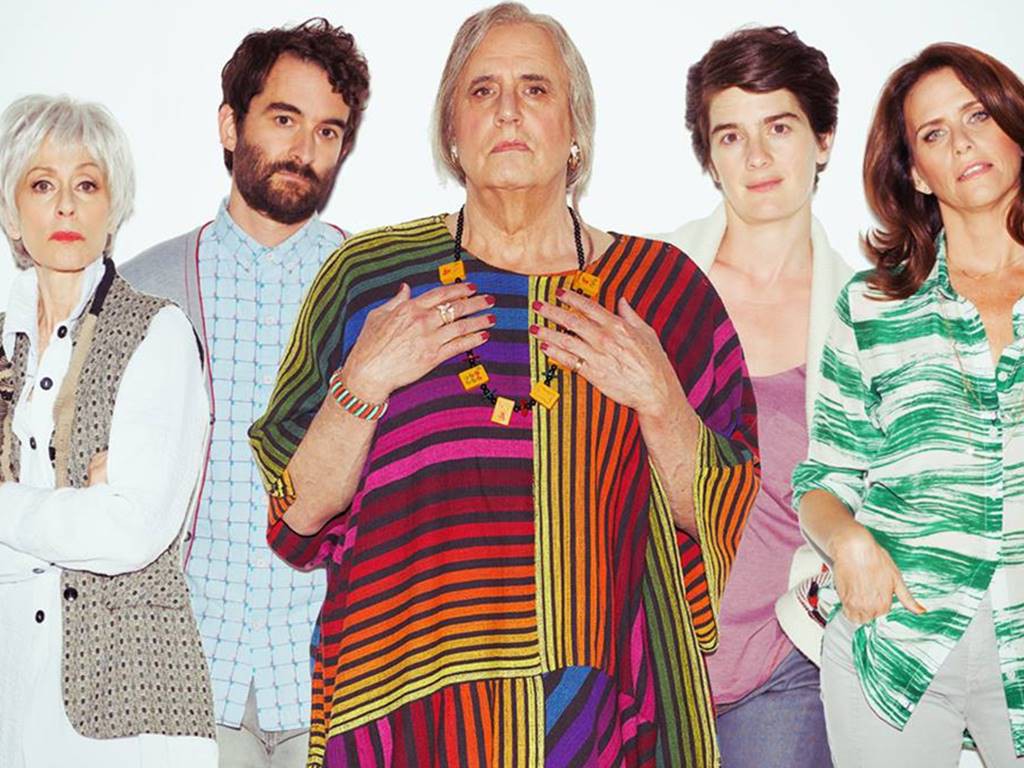
transparent

Transparent

Despite the overwhelmingly positive critical reception, I had resisted watching this show because of the conflicting opinions within the transgendered community about whether the way it represents that community is a good thing or not. To read more about their criticisms and concerns, click here. (Like any community, there are a variety of opinions, but from what I could tell, the common consensus leaned towards the negative.) I personally cannot speak to whether the show accurately or positively depicts the experience of transitioning, so I’m going to focus on the show as a show.

It’s an exceptional show. These are flawed human characters—some might say they are characters defined by their flaws—that you will recognize and cringe over. You will panic and think, “Is that me? Please don’t let that be me.” Nominally, it’s a show about a 67-year-old father of three’s transition, but it’s actually a show about a family, the Pfeffermans. There’s Maura, trying to navigate this major change in her life with dignity and grace (her family does not make it easy). There’s lackadaisical Sarah, the oldest, who reconnects with her long-lost girlfriend, leaves her husband pretty much on a whim, and spends the rest of the series white-knuckling it through that decision. There’s petty Josh, the commitment-phobic middle brother who has an ongoing affair with his former babysitter. There’s self-centered Ali, still on the gravy train, who will try anything once and can’t seem to make any solid decisions for herself. And there’s Shelly, the distant mother more worried about trivialities than whether her current husband is missing.

Watching them battle through their respective life challenges could seem like torture, except that creator Jill Soloway and her team of writers imbue the show with whimsy, emotionality, and an honesty that is beyond affecting. There’s definitely an Office UK version of this show to be played for squirm-inducing laughs, but they go the more fulfilling route. It’s also nice to see a show that depicts a religion other than Christianity (they are Jewish), and isn’t afraid to engage with it on a critical level. That said, the writers’ interests quite obviously evolved away from Maura and towards the children, with her barely appearing in the last episode. Irritating Ali, who I believe is the character that stands in for Soloway herself (the show is semi-autobiographical), is given showcase after showcase, as if the narrative is somehow as narcissistic as she is. But that is a small criticism in what is really a beautiful and heart-rending depiction of family life.

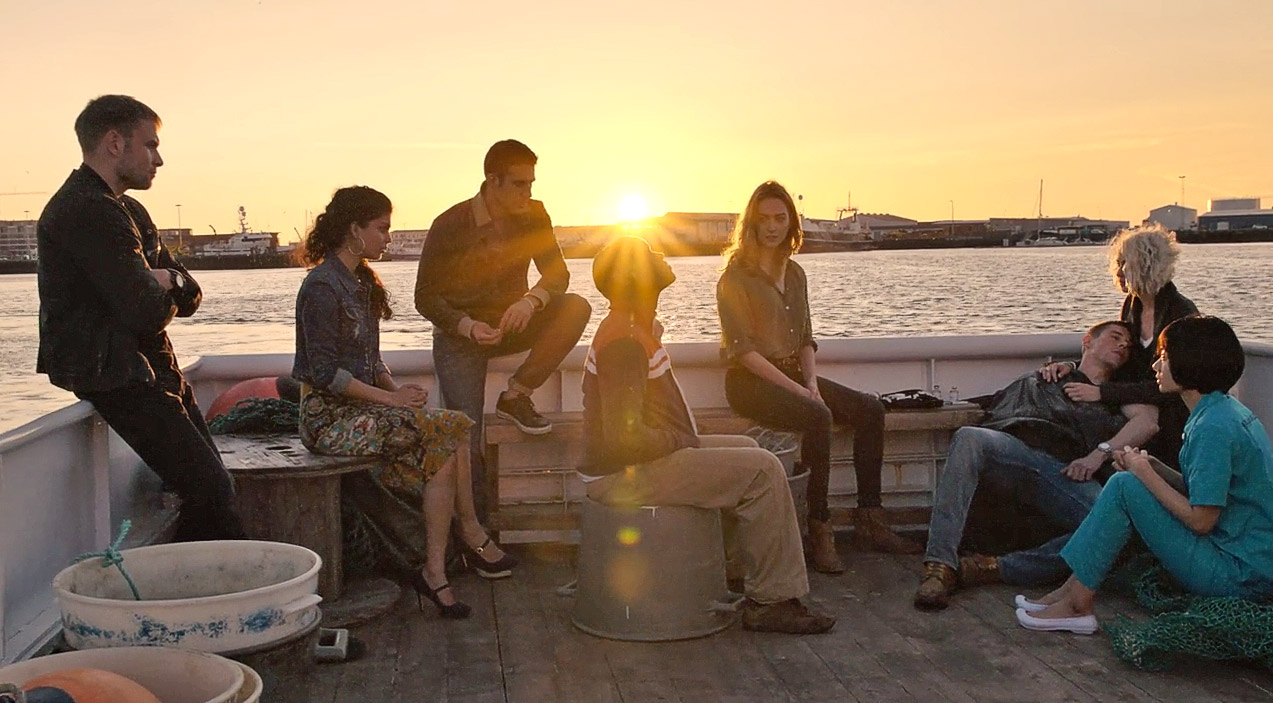
 sense8-12

Sense8

Before I get into the nitty-gritty, I want to say I loved this show to bits and pieces. It is daring, it is passionate, it is avant garde, it is maddening in all the best ways. It’s about a cluster of eight people who can feel and communicate with each other even though they are spread across the globe, but this sci-fi premise plays a backdrop (a deep backdrop) to an exploration of other cultures and life experiences. The creators tip their thematic hand pretty early with the idea of the universality of human experience, but you never really mind because the message is a strong and resonant one.

Structurally, there are some very slow and navel-gazing parts, but you forgive these because the phenomenal cast gives it their all and then some. My personal favorites were Sun, the badass corporate dragonslayer; Lito, the melisma-loving Mexican soap actor; and Nomi, the former hacker and current LGBTQ blogger. And so many others. The show was shot in the eight different countries the lead actors represent, and it works if you turn the sound off and just gape at the beauty of each place.

Still, I would be remiss in not mentioning that I had some serious issues with the representation of all these diverse cultures. Specifically, the inability of the creators to escape privileging the white characters. Though Sun does get a few good fight sequences, overwhelmingly it is the white male cis-gendered American who jumps in to save the day for the male, female, and trans characters. He’s also the one who has all the agency in terms of learning about them being sensates and the hazards of that new world. Not to mention that the narrative for every character of color is resolved in the penultimate episode, so that the last episode can concentrate on the romance between the two white straight characters, and how the white American dude rushes to save his love interest. To top it all off, the series ends in a Pieta-style tableau of the characters around the white male savior.

Whether consciously or not, the creators really struggled to subvert these common narrative tropes and get away from archetypes. I also think they should re-evaluate the need for gratuitous action and violence in a show that purports to be about authentic human experience and multiculturalism. I’m not saying they should turn it into some kind of We Are The World sing-along, but several of the characters drop a lot of bodies with little to no consequences. That Wachowski-style, “Guns, lots of guns,” approach to the action doesn’t quite mesh with the show’s themes. For the second season, I hope they work harder on the plot structure, so that every act, violent or no, is character-motivated and realistic. But is it worth your time? Hell yes.

Have you watched any of these shows? Share your thoughts in the comments!

Selina

Miss Kray’s Editing Tips #4 — Pattern Recognition

Tip #1: Earworms. We’ve all had them. That song that gets stuck in your head and just won’t go away. You hear it everywhere, in everything, from raindrops to ringtones to the drip-drippity-drip of your coffee maker. The melody creeps up on you when you’re doing something mundane but distracting, like dishes or laundry. Before you know it, you’re humming it again. Some heinous Justin Bieber song. Bad Romance. The jingle from that annoying Triple-Dent gum commercial. The theme song from one of your kids’ favorite shows. Even songs you like can get your back up after a while. There’s only one thing to do…

Actually, there’s nothing you can do about earworms, sorry! They are like the hiccups; they’ll go away if you ignore them. But writers have their own form of earworms, and those are much easier to excise. Like the song that haunts your every waking moment with its poppy melody, every writer has words, phrases, or syntax that they overuse. Sometimes the problem is exclusive to a scene or a section of a book, where your brain catches on a word and, like a skipping record, keeps coming back to it. Sometimes it’s like the killer in a slasher flick that keeps coming back from the dead, not just in the first film, but in multiple sequels. No matter what you do, you just can’t seem to put that word down for good.

Though every writer is hobbled by this to some extent, it’s a crutch new writers often lean on while honing their craft. Back in my fanfic days, inspired by Homer and the oral tradition, I deliberately used certain phrases over and over again to give my work a kind of epic quality (it was Lord of the Rings fanfic, after all), à la “the rosy-fingered dawn.” I remember a friend taking me to task for the overuse of the word “dulcet” in particular, and many a writing group has pointed out my tendency towards overlong, essay-like sewrintence structure. I guess I’m just an academic at heart.

Pattern recognition isn’t just about identifying overused words. Keep a weather eye out for too-similar sentence structure as well. This post was inspired by a book I’m editing at the moment, in which the writer uses ‘and’ in virtually every sentence of the prose. “He jumped on the bus and walked to the back. He found a seat and settled in. He took out his laptop and pulled up a file. He scanned through the pictures and found the one he wanted.” (Not an actual quote from the book.) That’s an exaggeration, but you get my point. Don’t just look out for word repetition, try and spot other patterns in your writing and break them.

As a writer, it’s vital to become familiar with the words and syntax that recur in your work and to look out for them during the editing process. A good editor will spot those kinds of things, but even better if they don’t have to. After all, the cleaner the manuscript you give them, the more time they’ll have to concentrate on the important things, like plot and character development—and it might shave some editing time off your bill.

Tip #2: What’s in a name?

“-Jack!

-Rose!

-Jack! Jack! Jack!

-Rose!

-Jack!

-Swim, Rose! I need you to swim! Keep swimming.

-It’s so cold.

-Swim, Rose! Come on. Here. Keep swimming. Come on. Come on, Rose. Stay on it. Stay on, Rose. It’ll be all right now.”

–Actual dialogue from the movie Titanic, by James Cameron.

Disaster movies are lousy with name repetition, sometimes for good reason. You’re not going to stop and give a soliloquy when an axe murderer is chasing you or you’re stuck on a luxury liner that’s about to break in two. But we’ve all seen those movies where the characters call out each other’s names too often, to the point where it becomes almost laughable and nowhere near true to life.

In the first five lines above, Rose and Jack are trying to stay together amidst harrowing circumstances, so the fact that they are using each other’s names makes sense. In the rest of the quote, there is absolutely no reason why he needs to keep saying “Rose”. At that point they are alone in the water—who else would he be shouting at? Every time I catch some of Titanic, I remember all over again how annoying and unrealistic the name repetition is.

Books are a much less forgiving medium than film in this regard, especially given the frequency with which characters’ names appear in the prose sections or speaker tags. So it’s best to edit out the proper names from all dialogue unless absolutely necessary.

Think about how often and under what circumstances you would call someone by their name in real life. I don’t know about you, but I almost never say my friends’ names unless I’m calling to them from far away or we’ve been separated in a large crowd. I also tend to use their first names when underlining a point or in anger. The latter is especially true for my dog. I almost exclusively call her by her real name when I’m annoyed; otherwise, it’s one of her 10,000 nicknames.

Use a similar rule of thumb when you’re editing. If your character has an emotional motivation for calling someone by their name, then leave it in. If it’s window dressing, cut, cut, cut! An exception can be made for historical fiction, since in certain cases it would be normal for your characters to use an honorific, or there’s an established protocol to how people are addressed. But even there, don’t overdo the ‘sir’s’, ‘ma’am’s’, and ‘my lord’s’/’my lady’s’. As always, read these sections out loud to get a sense of how the flow is working.

Recognizing these patterns in your writing can help sharpen your editing skills and make for a better experience for your readers. Earworms can burrow their way deep into your brain, so make sure you don’t inspire any of your own.

Too Much Is Not Enough: Being an Author in the Age of Binge

And I must be an acrobat
To talk like this and act like that.
And you can dream, so dream out loud
And you can find your own way out.
And you can build, and I can will
And you can call, I can’t wait until
You can stash and you can seize
In dreams begin responsibilities
And I can love, and I can love
And I know that the tide is turning ’round
So don’t let the bastards grind you down.

-U2, Acrobat

I am a slow writer. Even if I didn’t work a full-time job, pick up extra editing work in the evenings, try to maintain at least a few friendships, not to mention take care of all the other minutiae of living (one of which barks and demands three walks a day), I would still be a slow writer. I envy those authors who can pound out 4,000-7,000 words in an afternoon. That is not me.

My best ideas, like a good pasta sauce, need to simmer awhile. I like to think, and think, and think again about a scene, stirring it through my mind until the character beats boil down to their essence. Only then will I sit down to write it and, on my better days, watch it transform into something unexpected. I can always tell when I’m forcing it, when I haven’t added enough seasoning to the sauce. Like any author, I have more than a few false-start books on my laptop. When a story isn’t working, I usually top out at about 40 pages. If I make it past that point, then I know I did my prep work.

Which is why my panic level is reaching DEFCON 1 in terms of having another book out this year. The “How am I going to make a career out of this if I can’t even get one book out a year?” merry-go-round in my brain is at full speed these days. Especially in the age of binge watching, where media is available in large, consumable chunks, I can’t afford  that long a space between publications. And I’m sure I’m not alone in feeling the pressure to produce.

Because I’ve been on the other side. I recently finished reading J.L. Merrow’s Played, and my reaction upon reaching the last page was: “Want. More. Now. NOM.” I hadn’t read anything by her in a while, and I love the worlds she builds for her characters. There’s a cosy feeling to them even when there’s angst, and I just wanted to snuggle down for the duration. Problem is, I’ve read all her other books.

I don’t feel this way about every author. I adore Harper Fox, but her books take a lot out of me. The journey of reading them is often thrilling, heart-wrenching, and joyous all at once; after those, I need a break. Some smoosh. So while not all my favorite authors are like crack, I know firsthand the impatience of waiting for a long-anticipated book, or even another book by a beloved author (nudge-nudge, Scarlett Thomas).

But is the bingeing tendency in our culture creating unreasonable reader expectations, especially in the romance industry, where many readers all but inhale books? Is it unrealistic to expect authors to crank out more than three titles a year to answer audience expectations? Does the law of diminishing returns apply if authors turn into book-churning mills?

The evidence is inconclusive. We all know of successful series, like Jordan L. Hawk’s SPECTER series, that have multiple volumes of excellent quality and narrative inventiveness, that could seemingly go on forever. And we all know of authors like Laurel K. Hamilton who can’t let her universe or her characters go, when maybe she should. Or series that start off great, like a popular M/M series mentioned by a member of the Hassell and Hall group on Facebook the other day, described as—to paraphrase—the first three were great, but the person lost interest when it started to be never-ending wedded bliss. I admire J.K. Rowling and Elizabeth George in equal measure, the former for setting an end to her series and sticking to it, the latter for making the hard decisions and keeping the emotional life of her lead detectives fresh over almost 20 mystery novels.

And then there is the peculiar case of my fellow slow writer, George R.R. Martin. I alternate between feeling really bad for him (and his millions, LOL) and thinking he must have known what he was getting into from the start. He will be perhaps the first series writer in history to have the long-anticipated final volume of his series spoiled by the TV show his books spawned. Other people will write the ending of his series before he does. That must be depressing as hell. On the other hand, some of those who’ve read the books (which does not include me) are of the opinion that they could have concluded with Book Four, and he’s been stretching the plot too thin ever since. No matter whether you’re a writer or a reader, it can be hard to let go.

Authors are also in the unique position that they work on a daily basis with things—invisible things, characters and worlds that are only in their heads—that they love unconditionally. Little wonder some authors never want to abandon the worlds they create, even when they have nothing original or compelling left to say. That they, like (possibly) me, fuss over every detail, never truly satisfied with their creation, no matter how much love and care they’ve devoted to it.

I may be in the minority, but I think pressuring authors to perform, whether it be writing the story you want to read or begging for an unnecessary sequel, results in less than spectacular work. But then, there’s something to be said for not being so precious and just writing the damn book. Either way, the key is finding your balance as an author, a reader, a creator, a consumer.

And, as a far better writer than me once said, don’t let the bastards grind you down.


-Selina