Spotlight on Homeless LGBTQ Youth

11030700

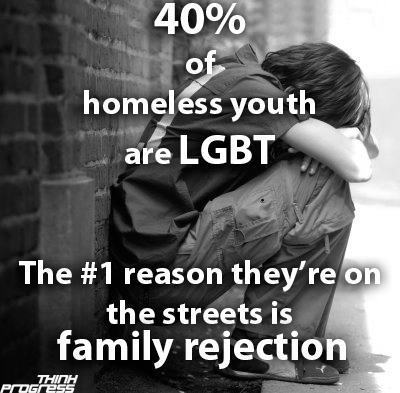
While casually perusing my GoodReads mail, I came across this startling statistic. It stopped me short. I’ve read quite a few M/M books where one of the protagonists is or was homeless and had to prostitute himself for a time, but I never really thought about the reality. They were, after all, romance novels, and a host of horrible things happen to protagonists in order to create dramatic tension. I bet the 40% in that poster wouldn’t mind if some of their hardship was merely dramatic tension, easily resolved by the story’s end.

Instead, here are a few sobering statistics I learned after a cursory search:

-LGBTQ youth are twice as likely to experience sexual abuse before the age of 12.
-LGBTQ youth, once homeless, are at higher risk for victimization, mental health problems, and unsafe sexual practices.
-58.7% of LGBTQ homeless youth have been sexually victimized compared to 33.4% of heterosexual homeless youth.
-LGBTQ youth are roughly 7.4 times more likely to experience acts of sexual violence than heterosexual homeless youth.
-LGBTQ homeless youth commit suicide at higher rates (62%) than heterosexual homeless youth (29%).

Source

I also learned that there are precious few shelters that cater to LGBTQ youth. I found a few in the United States, one in the UK and a related charity in Canada. The Toronto city council was recently petitioned to create more options for homeless LGBTQ youth, because of “normalized oppression” in the general shelter system. To quote Alex Abramovich, a research coordinator with the Centre for Research on Inner City Health at St. Michael’s Hospital in Toronto (and this CBC news story):

“It’s come to be expected that the shelter system is homophobic and transphobic so LGBTQ youth will frequently avoid the shelter systems and find themselves in situations such as sleeping on a park bench or in alleyways.”

Rejected by their families and their communities. Subjected to sexual abuse, homophobia from all corners. Deprived of the fundamentals, such as food, shelter, education, love, respect, all because of outmoded social conventions and bigotry. We can tell them it gets better all we want, but that isn’t going to put a roof over their heads, get a meal in their bellies, give them somewhere to feel safe and accepted.

Donations can. Volunteering can. Public pressure can. In the US, you can donate to Lost-N-Found Youth in Atlanta or ALSO Youth in Florida or the Ali Forney Center in New York City. In the UK, there’s the Albert Kennedy Trust. If you or someone you know runs a shelter, and they are interested in learning more about how to cater to LGBTQ youth, loads more information can be found here. Here in Canada, there’s Egale.

Canadian Thanksgiving is in a little over a month. Wouldn’t it be great if some of these kids could be spending it in a shelter, enjoying a hot meal, with others like them, watched over by sympathetic staff and volunteers? I hope one day kids whose only crime is to love who they love, or be who they are, are relegated to the world of fiction.

(Much thanks to Moderatrix Lori from the GoodReads M/M Group for shining a light on this issue.)

-Selina

Coming Soon to an M/M Publisher Near You…

It’s Labor Day weekend, peeps. I’m sure I’m not the only one thinking, “When did that happen?” The temperatures for early September are already looking on the chilly side. I just bought my first sweater of the year (short-sleeved, but still). Doo-doo just got real.

Here at Chez Selina, it’s been one tough summer, and I certainly don’t feel like I’ve caught my share of rays. So, in order to get myself excited for fall—which, really, is usually my favorite season, and this year may just feature the release of a certain book by a certain blogger (AKA me!)—I’ve decided to list the M/M books I’m most looking forward to reading. Nothing wrong with giving some of my favorite authors a little free promo, either, right? (*And* I’m fairly sure you weren’t exactly salivating for another recipe post. There are a couple of pop culture pieces in the pipeline, but probably won’t see the light of day until my schedule relents a bit—see the aforementioned rough summer.)

So, without further ado, here are the titles that have got my eyes twinkling, my fingers itching, and my loins… well, you know. In other words: Can’t. Bloody. Wait!

FlightOfMagpies72lg

Bloodline_200x300

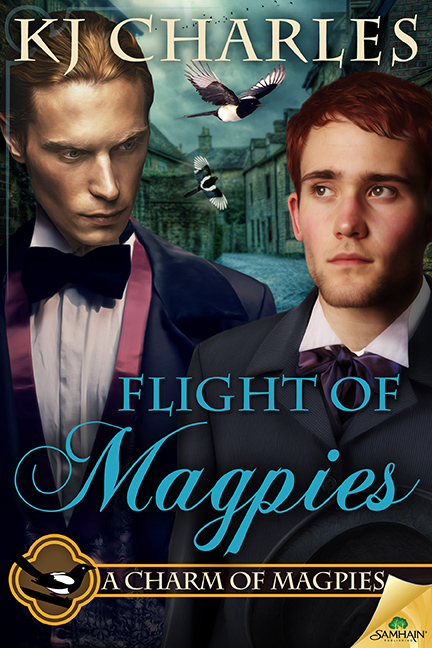
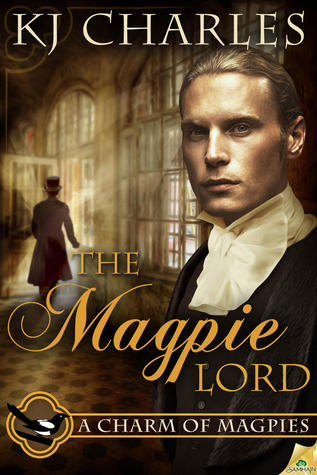
Flight of Magpies, KJ Charles and Bloodline, Jordan L. Hawk, here and here. I’ve mentioned my love for these ladies’ work before, and I am beyond eager to dive back into their respective series.

H&M3_BoyWithPainfulTattoo_400x600 (2)

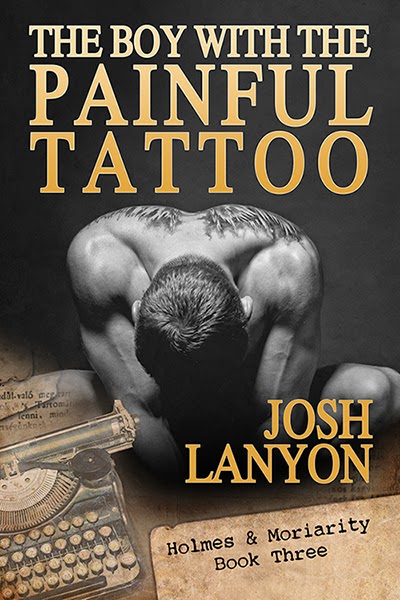
The Boy with the Painful Tattoo by Josh Lanyon, here. Never miss a book of his! Can’t wait to dive back into the lives of Kit and J.X. (now played by Benedict Cumberbatch and Andrew Scott in my mind palace).

FeverPitch72lg

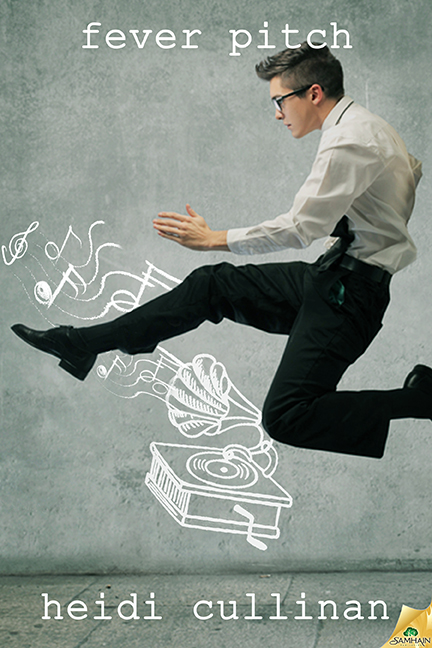
Fever Pitch by Heidi Cullinan, here. I have to pass on a lot of Heidi’s books, not because she isn’t a kickass author (she so is), but because of the kink level, which makes her less kinky books that much more precious to me. That we get to read more about Kelly and Walter only sweetens the deal.

Unjustified Claims by Kaje Harper (no cover or link yet). I was always a vampire girl, until a JesseWave review convinced me that Ms. Harper’s books were different. I love all her books, but have a special place in my heart for her wolves. Can’t wait to meet the new members of the pack.

But the most exciting news of all, though so many details are still very much TBD and this is not an official announcement, is that one of the books on my In the Works page will soon be in the works no more! More concrete information to follow…

In the meantime, show some of these authors some love and pre-order these tantalizing new titles!

Cheers,
-Selina

Author Interview – Eresse

Today, I’d like to help shine the spotlight on a longtime friend and fellow writer, the indelible Eressë!

As enthralled by her writing style as by the gracious way she has always navigated both fandom and author-dom, I have been a fan hers since I read the first chapter of her classic fanfic, Greenleaf and Imladris. She was the first of my writer friends to parlay her fandom success into original novels, which are among the most inventive and engrossing that I have read.

Her series, The Chronicles of Ylandre, is set in a fantasy world where everyone is dual-gendered (albeit very masculine hermaphrodites. I would classify the books as fantasy M/M). You would think this would eliminate the need for a strict caste system, devious politicking, and prejudice. You would be wrong. Part coming-of-age tales, part dramadies of manners, part family saga, all heart-rending romances, The Chronicles of Ylandre books cast a spell that you are more than happy to be under. The characters are flawed but compelling. The world she has created is beyond unique. Best of all, the books have heart without skimping on drama and—my favorite—angst.

It is a thrill and an absolute privilege to help Eressë celebrate the release of the sixth book of the series, In Fine Form. I invited her to submit to an interview, so, without further ado, I’d like to introduce you to the lovely Eressë!

1. Tell us a little bit about yourself and how you got into writing.

I’m from Southeast Asia, married with three sons and one beloved pooch. I chose to use a pen name because I want to separate my writing identity from my personal one. Since I started writing publicly through Lord of the Rings fan fiction, I picked a name from the elvish language J.R.R. Tolkien created for his magnum opus. And the reason I was drawn to Eressë is because it happens to have the same meaning as my nickname and I like the way it rolls off my tongue.

I’ve always loved spinning tales. But it didn’t occur to me to set them down in writing until I got to high school. I started to experiment then, jotting down plot bunnies as they came to me or writing short stories. The latter was often in response to the lack of themes or plots I wanted to read but couldn’t find in the local bookstores. In those days, variety and diversity in fiction wasn’t the rule in this neck of the woods.

Anyway, once I got started, I just kept on writing. But these early pieces never saw the light of day. Then I discovered online fan fiction and decided to put my writing out there and see how it would be received. Everything took off from there.

2. Ah, the good old days! Can you talk a bit about your writing process? How long does it take you to write a book? What kind of schedule do you keep?

It takes me at least six to eight months to write a book depending on how involved the plot is and the amount of research required. I always start out with a detailed outline and, in the case of Chronicles of Ylandre, with its almost concurrent storylines, a very comprehensive timeline, which includes events from previous books. For me, it’s the best way to ensure continuity. Once I have all the basics in place, I start writing in earnest.

When I write fan fiction, I produce the chapters in linear fashion because of the serial nature of posting fanfic. But when I write original work, I don’t necessarily write chapters in order. I sometimes do the last chapters and epilogue first or start in the middle, then go back to the beginning. Or I might write different scenes and later figure out which ones belong to what chapter. I find it depends on my mood at the moment or whether I’m in the proper frame of mind to write about something I’m uncomfortable with, such as violence and infidelity or scenes I’m not that knowledgeable about, like warfare and military life.

I try to write something every day even if it’s just a page worth of stuff—keep the momentum going, so to speak. Of course, the occasional bout of writer’s block can disrupt that. When that happens, I reread every book to re-immerse myself in the Ylandre universe and hopefully get back in writing mode.

3. So you may actually have read your books more times than your devoted readers? Cool!

The world that you’ve created, Ylandre, is so unique and so vividly rendered in your books. How did you come up with it? Was there something specific that inspired you or that you wanted to get across?

Thank you. I honestly don’t know how I came up with it beyond my love for historical and fantasy romance. I suspect it was there all along and probably influenced my fan fiction stories. In a sense, LotR fanfic became the means by which I explored themes and storylines I was intrigued by. But I had to fit those ideas as plausibly as I could into the existing canon. Of course, that wasn’t always possible and the unexplored ideas could only find a home in an original work.

I did incorporate my own socio/political background into the series—the rigid class divisions, my Roman Catholicism, the colonial history of my country and the political upheavals I’ve lived through. And come to think of it, this is also my way of presenting a different sexual orientation as “normal.”

Heterosexuals far outnumber the LGBTQ population, but I don’t believe being in the majority gives anyone the right to marginalize those in the minority. I can’t abide the prejudice against gay people any more than I’ve understood bigotry based on gender, the color of one’s skin, or religious beliefs. It’s ridiculous to stand by something just because the majority believes in it or practices it. Majority isn’t synonymous with right—Christ’s crucifixion was demanded by a majority.

Okay, getting off the soapbox now.

4. Nah, stay up there! Nothing wrong with a good rant. Can you give us some examples of real-life events and how you transformed them to fit into your books?

Well, the social and economic divisions hereabouts are the basis for conflict in a number of books. People very rarely stray outside their respective circles in society. If there’s a crossing of class lines, it’s usually between people from not too divergent backgrounds. A slum dweller isn’t going to come into considerable contact with a rich family’s scion, much less marry one. So that’s one influence on my writing. The major difference is that the way my characters are written, it is possible to cross the social divide in Ylandre. Not so much in real life.

Coups d’état and government destabilizations have occurred frequently enough in my part of the world. So I worked this theme into several books albeit in different guises. It also plays a major role in the external conflict of In Fine Form.

The colonialist history of the world of Aisen is a nod to my region’s colonial past, while the monotheistic faith practiced by the Aiseni is loosely based on Judeo-Christianity and more specifically the Roman Catholic Church. On a personal note, Book Four’s medical setting is something of a tribute to my father.

You’ve probably noticed that I’ve made having concubines or paramours an accepted practice among the upper crust. Again, that’s a reflection of the patriarchal society I grew up in. But the concept is also prevalent throughout European and Asian history from which I drew much inspiration with regard to world building.

In a nutshell, the stories in Chronicles of Ylandre may be the result of pure imagination, but most of the settings and cultures are founded on actual history and/or personal experience.

5. What’s especially smart about the hermaphroditic aspect to the people of Ylandre is that you have an endless supply of couples to write about and you don’t really ever have to explain why there are so many male-male couples in your books, unlike some contemporary series where it seems like the entire population of some small towns is gay. But were you worried in the beginning about that aspect, since it is atypical of most M/M fare and more in keeping with the sci-fi and fantasy genre?

It’s funny, but back in high school I related a long and elaborate multi-couple romance to my sister (she’s the only one who knows I was already dreaming up romance stories way back when) wherein one couple wasn’t heterosexual but gay. However, I took it a step further because I made one of the gay characters a hermaphrodite. To this day, I don’t know why I did it; I just remember having such fun with that storyline and being satisfied with it the most when I finished it. And my sister must have enjoyed it the most too because it’s the only pairing she could recall in detail years after. Anyway, it’s obvious I was fascinated by the concept even then.

I love romance fiction, both M/F and M/M. My first attempt at original fiction was a M/F historical romance, specifically the Regency era in England—I’m a bit of an anglophile, something I share with my eldest son. Well, that didn’t work out due to the abundance of Regency romances and historical M/F romances in general. Anyway, I now realize I didn’t write the heroine with quite the same enthusiasm as I did the hero, not to mention the hero had more chemistry with the other male characters in situations of mere camaraderie than he did with the heroine even in the middle of a torrid love scene.

LOL, I’ve been there.

The same thing happened when I wrote my seminal fan fiction piece Greenleaf and Imladris. There were two heterosexual romances featured alongside the main M/M storyline. While I enjoyed writing those, I didn’t imbue either with as much detail or passion as I did the M/M story. I don’t know why this happens and I’ve stopped trying to figure it out and just concentrate my efforts on writing.

I do agree it’s startling to read stories wherein whole communities seem to be composed of only gay people. That’s incredibly unrealistic. I wind up abandoning series because the sense of disbelief overcomes my enjoyment of the stories. So, yes, writing about a masculine, hermaphroditic race certainly solves the problem of having a host of M/M couples and trying to explain their improbable numbers. But it also introduces other problems because one has to come up with a plausible explanation for the existence of a race of androgynes. That means pretty extensive world building. It’s a good thing I enjoy that aspect of writing.

Was I worried? Well, I think every first time submission to a publisher induces some anxiety. And had I not got involved in fandom and fan fiction first, I would indeed have been very worried. But fanfic has introduced some of the most outlandish concepts and plotlines and continued to thrive. So I knew there was an audience out there for something like this. Maybe not a huge one—straight romance will always dominate the genre for obvious reasons and gay contemporaries will probably top (no pun intended) LGBTQ romance for the foreseeable future. But since I just wanted to see if I had what it takes to get published, the existing audience was big enough for me.

6. Even more interesting than the dual-gender aspect is the fact that the society you’ve created is actually a very medieval-Renaissance-ish one, with rank and social status of premium importance. Your books are almost romantic dramedies of manners, in a way. Was that deliberate?

It wasn’t deliberate if you mean did I consciously set out to write them that way. I never really do. I start out with a basic plot and characterizations but from thereon whatever currently intrigues me takes hold and informs my writing. Since I’ve always been fascinated by the way culture and society influence or dictate behavior and especially in history, that fascination wove itself into the fabric of my stories by way of, as you put it, “dramedies of manners.” However, the medieval-Renaissance setting was a conscious choice because I felt it best suited the stories I wanted to tell and, as mentioned earlier, because of my love of historical fiction.

7. Do you do a bit of research for each book, especially as regards particular aspects of the setting, or just rely on your prior reading/knowledge?

Oh, yes, I always do research whenever I’m writing about something I’m not very knowledgeable about. For instance, I don’t know how battles or treaty negotiations play out, so I read as much as I can about the pertinent facts. On the other hand, my father was a doctor and my family was very much involved in politics at one time, so I have a smattering of knowledge regarding both fields. Nevertheless, I still do research because the last thing I want is to receive feedback accusing me of ignorance or laziness or worse, misleading readers into believing what I wrote is true.

I know I won’t get everything right, but I try for plausibility at least if not authenticity. And I think that’s possible only if most of the basics are correct.

8. So the MCs in Book 6 are Jareth and Yandro. What made you want to tell their story, as opposed to that of some of the other secondary characters in your previous books? And also tell us a bit about In Fine Form.

My passion for any given pairing dictates whose book I’m going to write next. I have to sustain a certain level of enthusiasm for a story for several months. Otherwise, the lack of it will show in my writing. I don’t ever want to “phone in” a story that I’ll be embarrassed to acknowledge later on. I want to be satisfied with the effort I put into every book and proud that I did my best each time. It so happened Jareth and Yandro’s particular story called to me very strongly when I was figuring out which book to tackle next.

In Fine Form
is my take on the world of diplomacy as it is practiced in Aisen, the world in which Ylandre exists. It’s also another look at the traditions and social prejudices that permeate Ylandrin society. This story is mostly seen through the eyes of Yandro, a Half Blood and a bastard of unknown parentage and indeterminate racial origins. Providence allows him entry into the company of the higher ranks of Ylandrin society, but he still must put up with the intolerance of those who think him beneath their notice.

To complicate matters, he is appointed the aide of Jareth, who isn’t just a True Blood of noble birth and a high-ranking Ambassador, but also a scion of the Royal House. So the extremes of their respective backgrounds come into play here and influence how they interact with each other. It doesn’t help (at least from Yandro’s standpoint) that Jareth is an incorrigible flirt and has no qualms about turning their professional relationship into a personal one as well.

There’s romance, humor, and diplomatic intrigue, barriers that need to be torn down, and secrets that have to be unraveled. And there are substantial glimpses of protagonists from previous books as well as appearances by characters who will take center stage in later stories.

You know, I enjoyed writing all the books in the series, but I have to say this is the one I really had a lot of fun doing.

And we look forward to hours of fun reading it! Thank you, Eressë, for giving us an in-depth glimpse into your process and for agreeing to be the first author interview on this blog!

Gentle readers, if you really want to escape to a faraway destination unlike anywhere you’ve been before this summer, consider a trip to Ylandre. A fantasy world of scheming, double-dealing, class struggles, and romance galore! I promise you, it will be worth the trip!

In Fine Form by Eressë will be released on June 23rd from Liquid Silver Books. Pre-order it here. If you want to start from the beginning of the series, her first book is Sacred Fate , which can be found here. On the web, Eressë can be found at Tales by Eressë: http://eresse21.livejournal.com/ and http://eresse21.weebly.com.

Thanks again, and continued luck with all your writing endeavors, my friend!
-Selina
The Very Model of a Historical Occult Investigator

It’s been one of those weeks here at Chez Selina, so this post is going to be the Internet equivalent of a cheerleading squad at a football game. Not that there’s anything wrong with that. I know there’s a lot of ‘Read this!’ out there, but when I recommend something, know that it’s because the book/show/film took possession of my mind for a few blissful hours and left me feeling giddy as a two-year-old on a sugar high. I generally keep a weather eye on trends in my reading, and lately there has been a particular genre that has been altogether obsessing me, so, without further ado, can I get a rah, rah, sis-boom-bah for K.J. Charles and Jordan L. Hawk?

I love historicals. I love stories about the supernatural and the occult. I love M/M romances. Know what I love most of all? Historical supernatural M/M romances with occult storylines! Whoo!

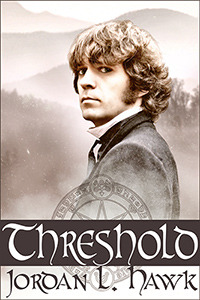
Two authors kicking ass and taking names in the genre are the aforementioned K.J. Charles and Jordan L. Hawk. Over the past two months, I have been mainlining every book of theirs I could get my hands on, and just when I thought I couldn’t get a bigger buzz off these gals, it turns out they wrote a book together, combining both pairs of characters. Closest thing to literary nirvana since the third Adrien English mystery? Signs point to yes.

Here are the deets you need to know:

17730586 18656381

K.J. Charles is a self-described “editor and writer who blogs about life on both sides of the publishing fence.” She currently has two historical supernatural series going, her Charm of Magpies series and the Secret Casebook of Simon Feximal series of shorts. Her Stephen Day from the Magpie series is one of the most unique, fascinating, and endearing characters I’ve encountered in a good long while—not that his romantic foil, Lucien Vaudrey, is by any means the lesser of the pair. Their backstories and their personalities are expertly contrasted; the dance they perform around each other, and eventually together, is as compelling as the events that endanger them at every turn. They are one of those couples that seem impossible on paper, but in life make perfect sense.

All I’ll say about period accuracy and detail is that I bow before her ability to conjure up the past.

Ms. Charles is also not afraid to raise the stakes as high as they can go. The danger in her books is not just real, not just potentially fatal, but the stuff of night terrors and childhood horrors. It’s a wonder her two protagonists haven’t gone mad from the living of these vicious otherworldly episodes. I’m not often genuinely scared reading M/M books, but I have been known to keep the lights as bright as possible and cuddle up with my doggy when reading these. I have been haunted by them, in more ways than one.

16128152 17840306

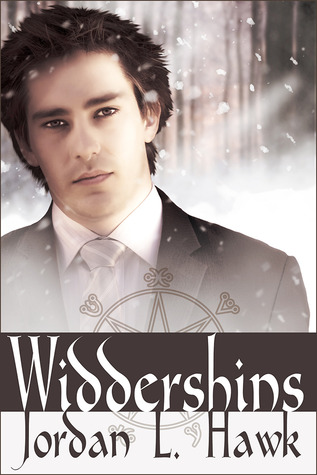
The same could be said of Jordan L. Hawk’s Whyborne and Griffin series. They are the American equivalent of Crane and Day (or Feximal and Caldwell, take your pick), living in the Hellmouth-esque seaside town of Widdershins, Massachusetts. Whyborne and Griffin are more of an obvious match as a couple, but that doesn’t make their meeting and subsequent courtship any less enthralling, especially as it involves undercover missions, a grimoire written in an arcane language, cults, sorcery, and the end of the world. Oh, and one of the strongest female protagonists in the M/M cannon in the dashing and cutthroat Christine.

I confess that Whyborne’s “child of wealth and repression who feels ostracized from his family and the world due to his bookishness, proclivities, and desire to take the road less travelled” struck a chord in me (for obvious, semi-autobiographical reasons). But I especially admire the way Ms. Hawk never lets Whyborne or Griffin (who has his own set of issues) wholly recover from their personal challenges and insecurities. They grow, little by little, inch by inch, over the course of the first four novels, but these changes and victories are hard-won, and ready to beat them back down at every turn. She also marries their supernatural investigations to their inner turmoil, so the case itself affects them on a spiritual and psychological level.

If the love story is especially involving, the supernatural elements are especially icky. There are scenes in these books that, excuse my French, grossed me the fuck out, and also inspired me to make like a Dalek and exterminate every last creepy crawly lurking in the corners of my apartment.

20880073

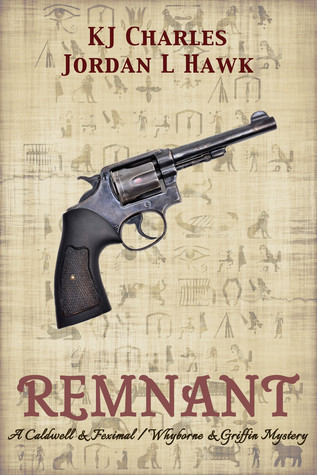
The apotheosis of their talents occurs in Remnant, where Simon Feximal and Robert Caldwell meet Whyborne and Griffin. Bickering and flirtation, as well as the hunt for a serial killer sorcerer, ensue.

Really, what more reason do you need to gorge on these delectable books? I promise, you’ll be thoroughly slaked and not gain a pound. That’s my kind of feast.

Cheers,
-Selina

The Normal Heart

article-0-1C29637C00000578-907_634x525

In the tradition of And the Band Played On…, last night HBO aired the film version of the 1985 agit-prop masterpiece by Larry Kramer, The Normal Heart. If you haven’t watched it yet, especially if you are an M/M devotee like I am, it is absolutely worth your time. (Spoiler warning from here on out.)

I’ll confess I had my doubts about the project, mostly due to the involvement of Ryan Murphy. To be blunt, I’ve never liked his work. Too camp, too lightweight, too silly, too trashy. But even Murphy admits that he restrained himself because of the importance of this project, to him and to the gay community at large. The fact that he can say that about his own work should perhaps give him pause, but anyway. He had excellent source material here, and, despite a few quibbles, I think he knocked it out of the park. If you aren’t sobbing by the end of this, I think you should go in for a chest x-ray to make sure you aren’t a robot.

The story centers around the ground zero for AIDS, the NYC gay community circa 1981, in the midst of unprecedented sexual and personal freedom for homosexuals. Ronald Regan publicly acknowledged the existence of the disease in 1985, but during the four years in-between, there was a lack of information, a black hole of support from governmental institutions, and even some resistance/disbelief within the gay community itself. And yet men young and old were dying by the hundreds, from a disease that wasn’t understood and that desiccated them from the inside out.

It might be fair to ask, “Why a movie about the beginnings of AIDS when we are so advanced, both socially and medically, now?” But when you consider how quickly the government reacted to SARS or H1N1, and how slow they were to address this out of prejudice and bigotry (not to mention the fact that 6,000 people get infected with HIV daily), the timeliness of the tale becomes clear. The Normal Heart is really a story about advocacy. What is the best way to make your voice heard? Some would say it’s through diplomacy, negotiation, awareness that doesn’t challenge anyone. But how much does that really get you, in the end? Isn’t it preaching to the converted? When it comes to life or death situations, to hate crimes, to racism, to a sub-culture that has no rights and no visibility, do you barter, or do you roar? And what are the consequences of that roar, even within your own community? The Normal Heart illustrates this conflict beautifully, and gives no easy answers.

It is also, in its heart of hearts, a romance.

article-0-1C29602800000578-654_634x342

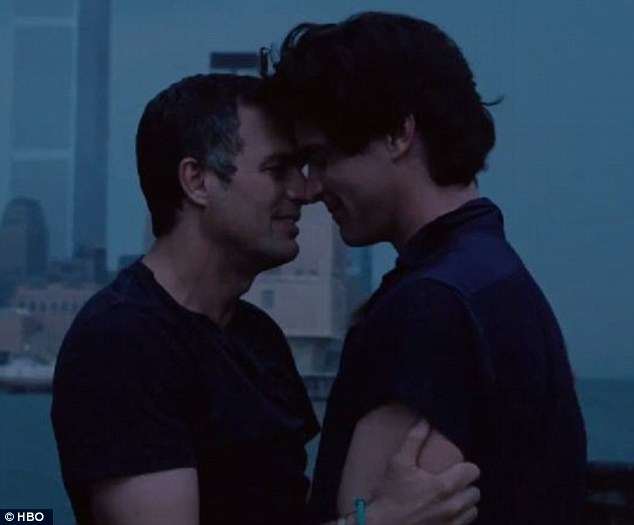
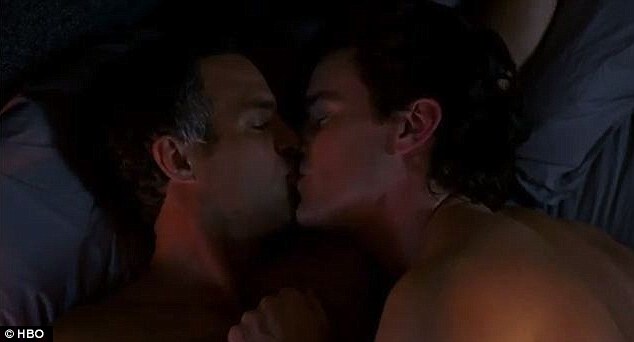
Mark Ruffalo and Matt Bomer play one of the most enchanting onscreen gay couples ever. Their passion and their devotion gave me Brokeback-level chills (and tears!). Anyone who doubts that there should be more gay romances in film and on TV needs to watch these two woo each other. Their relationship anchors the film, underlining the stakes for all the men living in that time, both personally and socially.

Which isn’t to say that the movie is perfect. I would have liked some of the other men who worked at the Gay Men’s Heath Crisis Center to have been a bit more well-rounded. Taylor Kitsch’s Bruce Niles, in particular, sometimes seemed to put up a fight because that’s what the narrative called on him to do rather than because that’s what viewers felt he would do as a person. One of the most stirring monologues is given by a character who is little more than a background player. These moments land, but they could have been that much more powerful with a bit of backstory.

But I’ve not heard a better defense of how anyone who is different should be treated within their own families than the one Mark Ruffalo’s Ned makes here. And the ending is perfect: a defeat for Ned on the personal and career fronts, but he is undaunted. He knows that sometimes a series of little victories can ultimately win the war.

Fun with Tropes!

“These people feel like human beings who just happen to live in a universe where the scenarios of superhero and soap opera fiction unfold, as opposed to coming across as characters who only do things because, well, that’s how characters in those sorts of genre stories are supposed to act.” -review of Arrow, “The Crucible” by Alasdair Wilkins on http://www.avclub.com on October 30, 2013

 Most of us who love genre fiction have a love/hate relationship with the tropes of each genre and subgenre. Some are great when done well, some cause us to fling the book/e-reader/tablet across the room when done poorly (an expensive proposition these days), all test the limits of believability on occasion. And yet, in the hands of an expert writer, they can be as juicy and delicious as a ripe peach (speaking of cliché).

While there may be only seven different story templates in existence, the cannon of literature (and trashy books) has given us enough variation on each of these seven narrative constructions that it shouldn’t be too hard for writers to come up with their own spin. Or so you would think. Having recently dipped my toe into the werewolf genre in answer to a publisher’s open call, I was surprised by how hard it was to exorcize myself of all my clichéd notions of the supernatural, pushing beyond what has already been done to create something new. Problem is, sometimes it’s fun to play with someone else’s toys (see: fanfiction). It can also be fun to see a good trope done well (as on Arrow). I’ve always believed that well-written characters set in a compelling world will do 90% of the work for you, no matter how basic your plot.

In romance, for instance, the whole point of the genre is to read a subtle variation on the basic “Person A meets Person B + obstacles = love” scenario. Readers of romance seek out certain tropes over and over again, until it becomes a kind of spiritual comfort food (I mean this without judgment: I am such a reader and use these books for that purpose). But they are also among the most knowledgeable about their likes and dislikes. Lurk awhile in any romance forum, and with a few deft clicks, you will find out in specific and vociferous detail what a given poster likes, hates, will tolerate, and can’t abide. They are also among the most accepting of other people’s likes and dislikes, never judging another reader’s love for, say, evil twin stories, and often taking a chance on books that contain the tropes they dislike if recommended by a friend. “I normally don’t like such and such, but…” is a common refrain.

Still, writing shouldn’t be about accepting the status quo. Doing what has been done before. Filling in the blanks. Whether you’re twisting a well-worn trope into some M.C. Escher-esque design or deconstructing it into something unrecognizable, you need to know the basics, the nitty and the gritty of what came before.

I conducted an informal survey of my writer and rabid-reader friends to find out which tropes they found maddening, infuriating, and fire-breathing-gorgoning. Caution: use at your own risk. 

-Amnesia

-Twins, especially with special powers

-Fish out of water

-The makeover

-Small town life = good; big city life = bad

-Creating blurred worlds between dream and “reality”

-Using a “crazy” character just to brouiller les cartes, i.e. to create chaos or confusion, or use as a red herring

-Setting the action in remote, old, worn-out places

-Creating a character that will, in the end, be revealed to be the alter ego of the main character

-­­­­­­Having a character getting lost in a cemetery or in the forest or jungle, or having to endure storms (snow, thunderstorm or heavy rain, at sea…). [I would add: using the weather as a metaphor for the character’s state of mind. Of which every writer is guilty, including me!]

-Chosen one fights their destiny until they finally have a revelation and give in

-­­A blind/deaf/handicapped character who has premonitions or insights

Which brings us to an aspect of tropes that I particularly loathe, i.e. those that play on “stereotypes and racial/sexual/physical differences as shorthand for character/conflict,” as my friend put it. Here are a few they mentioned:

-Homemaker=good; working woman=bad, also working woman who can only be completed by having a previously unwanted child (aka Miranda from Sex in the City)

-Using an angelic-looking girl as the villain

-Evil wife, girlfriend, ex (always female)

-Use of rape tropes, sexual assault as a motivation for the female character (or, in M/M, the weaker, fey male character)

-Use of person of color as the brute/macho/wild aggressor

-“Magical” token person of color

What’s dangerous about the use of these particular tropes is their lack of originality and complexity. I would challenge writers to see beyond labels, stereotypes, and social norms to try and create characters who can be some of these things, but who are so much more.

Since my focus – and focus group – traffics mainly in M/M romances, here are a few tropes that are somewhat unique to that genre (though some of them can be applied to romance as a whole).

-Naive virgin paired with male slut

-Person falls in love with dude who used to bully him

-Gay for you (not to be confused with “out for you,” which is more realistic)

-Rent boy with a heart of gold

-Person who left a small town and returns to rekindle a long-lost flame from their teenage years

-Use of sexual assault as a way to delay the sex act

-Weak/butch characterizations

-True love fixes everything

-Insta-love

While scouring the Internet for information on tropes to add to this post, I came across some wild and wonderful things. For instance: A Periodic Table of Storytelling, created by the good folks at TV Tropes. If you want to waste some serious hours of your life, fall down that rabbit hole one weekend. Don’t be surprised if you don’t find your way out for a few days!

In true geek fashion, the folks at the now-defunct Strange Horizons compiled some submission guidelines to be reckoned with, “Stories We’ve Seen Too Often”. After reading that, my only question was: “What stories are there left to tell?” Seriously, I think they covered everything.

The message of all this is: don’t take shortcuts in your writing. Make characters flawed, multi-faceted, complex. Defy cliché and stereotype. Take something we all know and love, dismantle it, and build it back up again into something new. Set the world on fire with your insight, your skill, and your imagination! And don’t forget the most important equation: writing = fun.

Cheers,

Selina ;D