Like Stars Out Now!!

Friends,

Once upon a time, on a sun-drenched balcony in Nicaragua, on what for them was considered a ‘cool’ day, I decided I couldn’t dither with this book idea any longer and started to write Like Stars. I still have those first sweat-mired pages, though their scribblings little resemble the actual first chapter of the book (mostly because my handwriting, then as now, is illegible). Still, the architecture is there. A hooded man rides through the dulcet town of Haversham. Dr. Wesley Douglas thinks he’s seeing a ghost–the ghost of his long-dead lover–and is shocked to the core. The game, as they say, is afoot.

That was hardly the beginning of my journey as a writer, and the publication of the book is hardly the end, but for me, it was the moment I got serious about living my dream. It was the moment that led to today, one of the best days of my life.

Like Stars is on sale now!

Here are the buy links:

MLR Press (I will shamelessly say that I make the biggest royalty if you by it here, directly from the publisher, which offer both ePub and Kindle-friendly formats and all the necessary instructions. Just remember to scroll down the purchase page for details.) http://www.mlrbooks.com/ShowBook.php?book=SKLIKSTR

All Romance eBooks (this has a greater variety of formats): https://www.allromanceebooks.com/product-likestars-1681035-340.html

Amazon: http://www.amazon.com/Like-Stars-Selina-Kray-ebook/dp/B00PM6TQRU/ref=sr_1_1?ie=UTF8&qid=1415998270&sr=8-1&keywords=selina+kray

And if, after you read it, you felt like showing me some star love or writing a review on GoodReads, I wouldn’t complain: https://www.goodreads.com/book/show/23561956-like-stars?from_search=true

I couldn’t have done any of this without the support of all my family and friends, my writing group, the amazing staff at MLR Press, especially Laura, Kris, and my editor Jen, and all of the incredibly dedicated bloggers who helped me organize the tour and were so generous with their time: JJ, Marc, Evaine, Dani, Mark, Brandilyn, and Ëresse.

What started so many years ago is now yours to enjoy. I hope you end up loving Wesley and Nathaniel as much as I do.

Much love,
Selina 😀

Like Stars Blog Tour Schedule!

Beautiful Friends,

*Deep breath.* So, we are less than a week away from the start of the Like Stars Blog Tour and two weeks away from the release of Like Stars! My 14-year-old self can’t believe I just typed those words. My XX-year-old self would like to reassure you that this is the second-to-last post about the book unless something mega happens. But if you can’t promo your book on your own blog, where can you promo it, right? Well, see below. All that to say, thank you for your patience.

But I do think that the posts I’ve written for the blog tour will be of interest to you, and I hope that you’ll learn a little more about the book, about me, and about some of the things that obsess and confound me along the way. Also, a brief programming note to say that links will be updated to the actual posts once they are on the respective web sites. So, without further ado, here is the schedule:

Nov. 7th – Joyfully Jay hosts a discussion of the Mysterious Stranger trope

Nov. 10th – I’m at Rainbow Gold Reviews asking: When is a comet not a comet? (Kind of a trick question, this)

Nov. 11th – The ladies of Coffee and Porn host an introduction to the ladies of Like Stars

-And the kind folks at Love Bytes let me talk about Inspiration

Nov. 12th – How can you miss a post entitled the Eroticism of Edwardian fashion at Sinfully Sexy Books, with visuals?

-The penultimate stop is a discussion of Perspective at Prism Book Alliance

Nov. 13th – At the lovely Eressë’s Live Journal, the tour concludes with a post about the tale of Martin Guerre on which the book is based.

A huge thank you to everyone who so generously agreed to host this tour! There will be giveaways at every single stop on the tour, so don’t miss out! 😀

-Selina

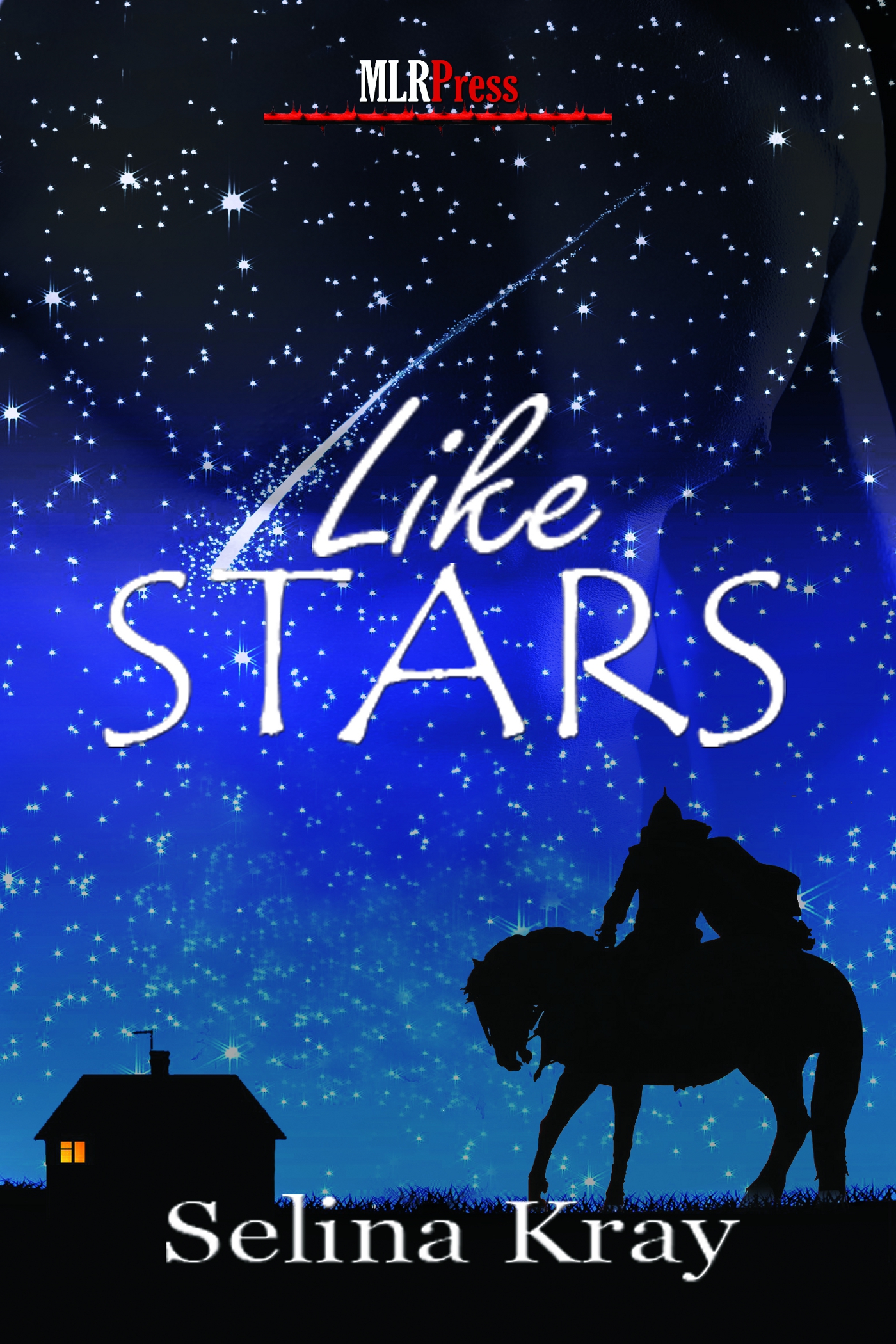
Announcing: Like Stars, Historical M/M Romance Out November 14th, 2014!!

24. 1400x2100Stars Front

Friends,

It is my tremendous pleasure to officially announce that one month from today, November 14th, 2014, my first novel, Like Stars, a historical erotic M/M romance, will be published by MLR Press! The cover you can check out above, the blurb and the trailer below. I am doing a Blog Tour from November 7th to the 14th, with details about posts, giveaways, and other fun stuff to follow. I hope you will all join me in celebrating the release of Like Stars!!

The blurb:

What if your true love walked back into your life five years after his death?

Nathaniel Thredgold has finally returned from the war. Or has he? His lover, Wesley Douglas, isn’t sure. Wesley must put aside his engagement, his disbelief, and his anger to give his professional opinion. The truth about their relationship isn’t an option. But is this stranger really the Ravensworth heir and Wesley’s long-lost love? When your heart’s at stake, there’s no room for doubt.

Set in the Edwardian era, Like Stars is a tale of mysterious identities, scandalous family secrets, and lovers in a dangerous time.

Many thanks to the kind folks at MLR Press for making this possible, and to Michelle Cary for the amazing cover art! It’s such a thrill to finally be able to tell you all the good news!

-Selina 😀

Last Night at Chapters Centre-Ville

The man who entered the four-storey-spanning glass elevator looked like any other: corduroys, boots, trench, scarf. Male pattern baldness. But as the doors shut and the car began its ascent, it was like being locked in a peep show booth, except he was the star of the show, his own private dancer. He dropped his pants, loosed his privates, spread his arms wide, and started to… pee. And dance. And pee. And dance. On the glass walls, for everyone to see.

The employees at Chapters Centre-Ville Montreal, of which I was one for almost four years, came to know him, not surprisingly, as the Dancing Pee Guy. He was one of our less savory regulars, and the bane of J. on the second floor’s existence, for obvious reasons. Involving a bucket, a mop, and a whole bottle of Windex.

My station was the information desk, a sort of mini-fort beside the cash. It was, to my mind, the best of both worlds. Proximity to the cash significantly reduced boredom, which happened when you were alone on one of the upper floors with little to do. The hub of the store, it gave you the chance to interact with customers, managers, guests, and fellow employees from all the other departments. For every pithy interaction with someone who couldn’t understand why a book with the word ‘hospital’ in the title might be hard to search for, there were the hours spent with serious book-lovers, discussing philosophy, art, literature, cinema.

Our store was special. For one, it looked like an old-fashioned library, all faux mahogany stacks and attractive but uncomfortable chairs. Little nooks that became your oasis on a snowy day. Unlike the Indigo down the street, it was a haven for artists who needed a day job that didn’t entirely stifle their souls and grad students who didn’t want to just punch a clock while they completed their degrees. We were, as a group, way too smart of their own good. I spent many a break involved in a passionate debate in the staff room, many a weekend going to someone’s poetry reading, concert, or exhibition. These people knew their books—if you knew what you wanted, they would give their all to find it for you, even if that meant a special order or calling another store. Of course there were nights where we dicked around—what’s the point of having a retail job if you can’t occasionally dick around?—but we were devoted, to the books if not always to the company.

We resisted the top brass’ desire to cut down on books and amp up the home decor section for as long as possible. When we found out that the web site was selling a book by a local psychologist that explained how to de-program gays, the staff—a good 50% of which were LGBTQ—collectively wrote a letter of complaint to the CEO (Chapters-Indigo famously has a policy against carrying hate literature). Ditto decorating the entire first floor in rainbow balloons for pride.

It wasn’t all sunshine and roses, of course. There were break-ins and broken hearts. You grew to love some books so much you’d pimp them to every customer (Shadow of the Wind), but despise others simply because of the amount of copies they sold. I used to joke that if I got paid a nickel for every Da Vinci Code I sold, I could have retired at thirty. The night of one of the Harry Potter launches, when everyone was celebrating, I accidentally miscalculated the change required from the bank to the tune of losing us $200, and spent a good hour crying in the office, terrified of being fired (spoiler: I wasn’t).

And now comes the news that my store, our beloved store, the one I love to revisit a few times a year even though I haven’t worked there for almost a decade, is closing. In its place? A Victoria’s Secret. If that doesn’t perfectly exemplify what’s wrong with our contemporary world, I don’t know what.

I visited last night, for the last time. It closes tomorrow. The cliche was true, it was a shell of its former self. All the upper floors and the basement were closed off. The Starbucks had already moved out. The last of the stock was collected on the first floor, where the bestsellers and recent releases used to be, divided into sections marked by handwritten signs taped onto the edges of tables, the sides of shelves. The two front doors were flung wide open, as if they didn’t even mind if you stole.

Though I was sad, I couldn’t help but smile. So much of the person I am was formed between those walls. There, I got my first taste of real responsibility, real challenge, real camaraderie among co-workers. I don’t think I’ll ever work anywhere where I like the people so much ever again. Chapters gave me one of my best friends, a lifetime of dinner party repartee, the courage to dip my toe into the publishing waters, and, with any luck, fodder for at least one madcap novel/television series.

I checked the elevator, but the Dancing Pee Guy wasn’t there. His legend, like the store itself, is now a thing of memory.

Coming Soon to an M/M Publisher Near You…

It’s Labor Day weekend, peeps. I’m sure I’m not the only one thinking, “When did that happen?” The temperatures for early September are already looking on the chilly side. I just bought my first sweater of the year (short-sleeved, but still). Doo-doo just got real.

Here at Chez Selina, it’s been one tough summer, and I certainly don’t feel like I’ve caught my share of rays. So, in order to get myself excited for fall—which, really, is usually my favorite season, and this year may just feature the release of a certain book by a certain blogger (AKA me!)—I’ve decided to list the M/M books I’m most looking forward to reading. Nothing wrong with giving some of my favorite authors a little free promo, either, right? (*And* I’m fairly sure you weren’t exactly salivating for another recipe post. There are a couple of pop culture pieces in the pipeline, but probably won’t see the light of day until my schedule relents a bit—see the aforementioned rough summer.)

So, without further ado, here are the titles that have got my eyes twinkling, my fingers itching, and my loins… well, you know. In other words: Can’t. Bloody. Wait!

FlightOfMagpies72lg

Bloodline_200x300

Flight of Magpies, KJ Charles and Bloodline, Jordan L. Hawk, here and here. I’ve mentioned my love for these ladies’ work before, and I am beyond eager to dive back into their respective series.

H&M3_BoyWithPainfulTattoo_400x600 (2)

The Boy with the Painful Tattoo by Josh Lanyon, here. Never miss a book of his! Can’t wait to dive back into the lives of Kit and J.X. (now played by Benedict Cumberbatch and Andrew Scott in my mind palace).

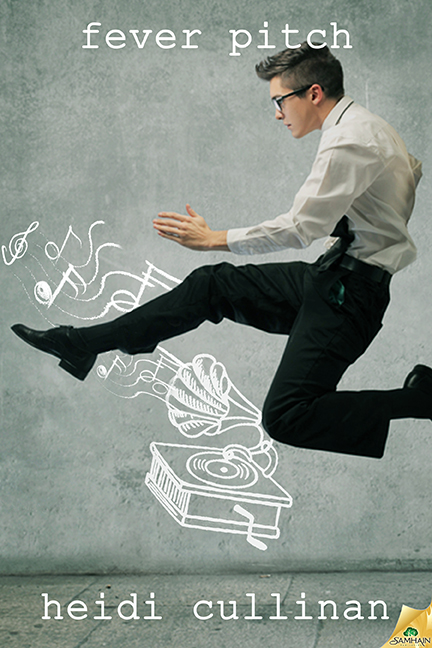
FeverPitch72lg

Fever Pitch by Heidi Cullinan, here. I have to pass on a lot of Heidi’s books, not because she isn’t a kickass author (she so is), but because of the kink level, which makes her less kinky books that much more precious to me. That we get to read more about Kelly and Walter only sweetens the deal.

Unjustified Claims by Kaje Harper (no cover or link yet). I was always a vampire girl, until a JesseWave review convinced me that Ms. Harper’s books were different. I love all her books, but have a special place in my heart for her wolves. Can’t wait to meet the new members of the pack.

But the most exciting news of all, though so many details are still very much TBD and this is not an official announcement, is that one of the books on my In the Works page will soon be in the works no more! More concrete information to follow…

In the meantime, show some of these authors some love and pre-order these tantalizing new titles!

Cheers,
-Selina

On false idols (and why they will fuck you up)

Was sent this quote by the sage Jeff Moore. Probably as close to a personal life philosophy as I could get.

“In the day-to-day trenches of adult life, there is actually no such thing as atheism. There is no such thing as not worshipping. Everybody worships. The only choice we get is what to worship. And the compelling reason for maybe choosing some sort of god or spiritual-type thing to worship — be it JC or Allah, be it YHWH or the Wiccan Mother Goddess, or the Four Noble Truths, or some inviolable set of ethical principles — is that pretty much anything else you worship will eat you alive.

If you worship money and things, if they are where you tap real meaning in life, then you will never have enough, never feel you have enough. It’s the truth. Worship your body and beauty and sexual allure and you will always feel ugly. And when time and age start showing, you will die a million deaths before they finally grieve you. On one level, we all know this stuff already. It’s been codified as myths, proverbs, clichés, epigrams, parables; the skeleton of every great story. The whole trick is keeping the truth up front in daily consciousness.”

– David Foster Wallace, This is Water

Miss Kray’s Editing Tips #3 – Comma Chameleon

In my work as an editor, there is one punctuation mark that never fails to cause confusion and frustration: that tricksy little comma. It is the one punctuation mark most often associated with a literary style—the Loki of the grammatical world, if you would, for its tendency to appear in some works and disappear in others. The Brits and the Yanks differ on when and how often it should be used. A ‘slip of the comma’ could drastically (and unintentionally) alter the meaning of a sentence. In the age of blogging and texting, both your average Jane and the editors of the OED are asking themselves, “Do I really need to put a comma there?”

Alas, there is no easy answer. Other than “follow your style guide” of course. Among editors, debates over the placement of a comma have been known to ignite battles that rage on into the wee hours. (Yes, these are the things we fight about.) If you don’t believe me, just go to any editing forum and type the words “Oxford comma” into the search engine. The trend these days is to eliminate as many as possible, unless you’re one of those dig-your-heels-in, old-school types who poo-poo the notion that grammar, like people, evolves. (And if you’re a foreign language student who just wants to nail something, anything down as an official rule, I feel your pain.)

So where is the line between changing with the times and maintaining some kind of rules, some kind of order? Thankfully, that’s a bit beyond the purview of this post! But I can offer a few helpful hints that will make your life a whole lot easier. (Seriously, though, follow your style guide.)

1. All right, let’s jump in with both feet. I’m a believer in the Oxford comma. It’s true. Un-follow me if you must.

For those of you who have no idea what that is—and I imagine there are many, since, unlike me, you have a life—the Oxford comma is the comma that comes before the ‘and’ in a list of things. For example: “My car has red, white, and blue stripes.” The Oxford, or serial, comma is the one between ‘white’ and ‘and’, which some style guides instruct you to omit if it doesn’t change the meaning of the sentence.

The most famous example that illustrates why the Oxford comma can’t always be omitted is a very bad joke (cribbed from Wikipedia):

A panda walks into a café. He orders a sandwich, eats it, then draws a gun and proceeds to fire it at the other patrons.

“Why?” asks the confused, surviving waiter amidst the carnage, as the panda makes towards the exit. The panda produces a badly punctuated wildlife manual and tosses it over his shoulder.

“Well, I’m a panda,” he says. “Look it up.”

The waiter turns to the relevant entry in the manual and, sure enough, finds an explanation. “Panda. Large black-and-white bear-like mammal, native to China. Eats, shoots and leaves.”

So unless you want a panda to shoot up your café and make a hasty exit, you need to add a comma between ‘shoots’ and ‘and’. But since there is no confusion if you omit the comma between ‘white’ and ‘blue’ in the earlier example, many fine editors believe that you should proceed with caution and only use the Oxford comma when there is a chance for misunderstanding, otherwise leave it out.

I am not one of those editors. My reasons are simple: if something could be considered wrong by omitting a punctuation mark, but will always be correct if it is included, then always include it and you will never run the risk of being wrong. Commas are complicated enough. Shouldn’t we all give ourselves a break?

2. One of the big new trends that I’m on board with is removing superfluous commas, i.e. ones that don’t add to the understanding or meaning of a sentence, but are more akin to taking a breath. For instance, the tradition of adding a comma after ‘so’, ‘and’, ‘but’, ‘now’, etc. You see this especially in dialogue: “Now, that’s not what I meant!” or “So, what do you think of that?”

Out, damned comma, out! They serve no purpose; they don’t affect meaning. The trend in Shakespeare’s time might have been to use punctuation for emphasis, but in our “no 1 curr”, text-and-blog society, those commas have gone the way of the dodo.

Speaking of dodos, a very old-fashioned style is to put the comma after the conjunction in a sentence, not before. Nowadays, this is not a matter of style—it’s just plain wrong. It’s not, “I went to the store but, forgot my wallet.” It’s, “I went to the store, but forgot my wallet.” If you need a refresher on conjunctions—or any excuse to break out some Schoolhouse Rock—here’s a cool video:

http://www.youtube.com/watch?v=RPoBE-E8VOc

3. This last tip I think about every day of my life, I kid you not. My grammar guru Frances Peck turned me on to it, and I will be forever grateful to her.

Say you have some adjectives that you want to use to modify a noun. Adjectives that haven’t been created equal. Some are hyphenated. Some are colors. Some form a unit with the noun. Which should go first? Which should be separated by a comma? Say you have a phrase like, “That scrawny, crass, no-good, two-timing, lazy lummox of a man” or “The gray cashmere sweater” or “The robust antique desk”. Is there a rule of thumb that can help you figure out which of those adjectives should be separated by commas and which shouldn’t? (I bet you can see where this is going…)

There is! These two types of adjectives are called ‘coordinate’ and ‘cumulative’. The trick to telling them apart is absurdly simple. There are two steps:

A – Insert the word ‘and’ between each of the adjectives. This determines if they both modify the noun in the same way. For example, can you say, “That scrawny and crass and no-good and two-timing and lazy lummox of a man”? Yes. On to Step B…

B – Try reversing the order of the adjectives and see if the meaning is the same. For example: “That lazy, two-timing, crass, no-good, scrawny lummox of a man”. Is the meaning the same? Yes. So all of the adjectives in that sentence modify ‘lummox’ in the same way, and therefore each should be separated by a comma.

Using the same two steps can also identify cumulative adjectives, which must retain a certain order to make sense. Usually, the adjective closest to the noun becomes a sort of group with the noun, and the other adjective is modifying that group, not just the noun itself.

For example: “The robust antique desk”. It passes the first test, “The robust and antique desk”, but fails the second, “The antique, robust desk”. Therefore, no comma.

Bonus tip: Never use a comma when a color is one of the adjectives that precedes your noun. “The gray cashmere sweater”. “The frail white tulip”. “The vast blue sky”. Colors are always cumulative. For even more detailed info on the order of adjectives before the noun and the Royal Order of Adjectives, check out this fantastic blog: http://zencomma.wordpress.com/2012/02/24/commas-between-adjectives/

Commas, like a pesky weed, may live to menace us, but common sense and careful pruning can keep them from growing wild.

Cheers,
-Selina

I Ain’t Afraid of No Ghostwriters

One of the by-products of the Western world’s celebrity obsession is something that really sticks in my craw: the branded celebrity novel. I’m not linking to any examples because I refuse to give them an ounce of promotion, but I will point you towards this article that I was reading on Entertainment Weekly’s website this morning, which both names and quotes several of the ghostwriters that are hired by the celebrities’ management teams to write these novels.

Yes, management team. The making, marketing, and packaging of these books is just another way of expanding a celebrity’s brand, akin to perfumes and nail polishes, at least in the minds of their handlers. Per the article, the ghostwriter is paid “a negotiated fee typically between $20,000 and $40,000” to “churn out several hundred pages that will ultimately be passed off as a celebrity’s creative endeavor.” While I have no doubt several conversations about the contracted book’s creative elements happens between the celebrity’s team and the ghostwriter, I find EW’s claim that celebs “usually create a novel’s characters and plot, providing a foundation for a ghostwriter to expand on” highly suspect, yet another bit of propaganda meant to make these books more palatable to people who, you know, actually care about writing.

Which these books’ young fans clearly do not, at least in the opinion of Valerie Frankel, Snooki’s ghostwriter. (Now there’s something you want on your resume.) “Fans don’t really care whether or not a celebrity wrote it or not, as long as they can visualize the characters and the setting.” You don’t say?

Say what you will about Dan Brown or E.L. James or James Frey or whatever hack author everyone’s shaking their fist at this week: they actually wrote their books. Of course there’s plagiarism, but even that takes more work than these celebs put in. While the ghostwriters likely see more money than the average author does in their lifetime, you have to wonder at what cost? Is someone going to pick up one of their own books on the strength of their name being associated with a celebrity? Unlikely. Per the article, they only get credit for their ghostwriting work if they have an agent as savvy as the celeb’s. There isn’t even a guarantee of success, since, like everything else in the publishing industry, some of these celeb novels have done well and some haven’t.

But it’s not so black and white. Who I am to criticize this particular brand of ghostwriter, when most celebrity autobiographies are ghostwritten? Do those celebs/politicians/whathaveyou get points for spending more time with the writer, or being more honest about their involvement? When I think about it, I’m really a bit of a hypocrite in this regard, because I read S. by J.J. Abrams and Doug Dorst (aka by Doug Dorst) last winter, and loved it. Is it okay for Abrams to put his name on that book because I thought it was well-written? Genre-busting? Original and wildly creative? Because he readily acknowledges he didn’t write a word of it? Because I like him more? Because I feel like he could write a book, if he wasn’t so busy directing movies and developing TV shows?

For an in-depth look on how much Abrams actually participated in the conception and execution of S. (which is an incredible book that you should definitely buy in hardcover), this interview with him and Dorst says it all.

There are no easy answers. In developing this piece, I tried to look at the issue from multiple angles, and each one led back to those super-annoying shades of gray. As a writer who is passionate about her characters and her craft, it irks the heck out of me when people compare books to nail polish and perfume, like they’re just another flashy, disposable product meant to generate profit for people who are either grossly overpaid for doing nothing, or grossly overpaid for doing a lot of creative things that do not include writing an actual book. But isn’t that ultimately how most publishers see the books they sell? Aren’t there plenty of so-called airport books, quick reads that scratch an itch when you need it, but don’t have a place in your library? Not everyone has to be David Foster Wallace. 

And aren’t I a writer in an industry somewhat like that? I may kid myself that my books are going to be beloved by millions, but the reality (a reality that I am quite satisfied by) is that most of my readers will blaze through the book and promptly forget about it. Oh, some will cherish it (Hi, Mom!), but most will either like it or not, and then move on to the next. Is what I’m doing really so different from what these ghostwriters are doing?

But the one argument I can’t really talk myself out of, the one that my purest, art-worshipping self can’t ignore, is this: we are teaching young people that you don’t have to put in the work to reap the reward. You can pretend to do the work, get someone else to do it for you, and be celebrated for it. It’s the equivalent of one of the popular kids at school paying a geek to write a paper for them. Most schools would suspend you for that if you’re caught doing it, if not outright expel you. But in life? Well, like the kid with the rich parents who gets out of everything, celebrities can just play the VIP card. 

Now, I know I’m not giving teenagers enough credit here – of course most of them are smart enough to realize that this is all a fraud. If not now, then when they grow up, grow out of their teenage obsessions, and face the real world. But I wonder if the lesson, if repeated enough, doesn’t stick in some way. I wonder if they’ll take to heart the words of  publisher Karen Hunter, who “[doesn’t] know that many teenagers that could write a book, period,” and fail before they even try. 

The stuff that gives me hope? Fan fiction. Self-publishing. YouTube, and other creative outlets. Young people – or really just people – have more access and more interest in pursuing personal creative goals than ever before in our history. 

So why do these celebs and their ghostwritten novels matter in the first place? The cultural revolution is already in full swing.

Cheers,

Selina ;D

Author Interview – Eresse

Today, I’d like to help shine the spotlight on a longtime friend and fellow writer, the indelible Eressë!

As enthralled by her writing style as by the gracious way she has always navigated both fandom and author-dom, I have been a fan hers since I read the first chapter of her classic fanfic, Greenleaf and Imladris. She was the first of my writer friends to parlay her fandom success into original novels, which are among the most inventive and engrossing that I have read.

Her series, The Chronicles of Ylandre, is set in a fantasy world where everyone is dual-gendered (albeit very masculine hermaphrodites. I would classify the books as fantasy M/M). You would think this would eliminate the need for a strict caste system, devious politicking, and prejudice. You would be wrong. Part coming-of-age tales, part dramadies of manners, part family saga, all heart-rending romances, The Chronicles of Ylandre books cast a spell that you are more than happy to be under. The characters are flawed but compelling. The world she has created is beyond unique. Best of all, the books have heart without skimping on drama and—my favorite—angst.

It is a thrill and an absolute privilege to help Eressë celebrate the release of the sixth book of the series, In Fine Form. I invited her to submit to an interview, so, without further ado, I’d like to introduce you to the lovely Eressë!

1. Tell us a little bit about yourself and how you got into writing.

I’m from Southeast Asia, married with three sons and one beloved pooch. I chose to use a pen name because I want to separate my writing identity from my personal one. Since I started writing publicly through Lord of the Rings fan fiction, I picked a name from the elvish language J.R.R. Tolkien created for his magnum opus. And the reason I was drawn to Eressë is because it happens to have the same meaning as my nickname and I like the way it rolls off my tongue.

I’ve always loved spinning tales. But it didn’t occur to me to set them down in writing until I got to high school. I started to experiment then, jotting down plot bunnies as they came to me or writing short stories. The latter was often in response to the lack of themes or plots I wanted to read but couldn’t find in the local bookstores. In those days, variety and diversity in fiction wasn’t the rule in this neck of the woods.

Anyway, once I got started, I just kept on writing. But these early pieces never saw the light of day. Then I discovered online fan fiction and decided to put my writing out there and see how it would be received. Everything took off from there.

2. Ah, the good old days! Can you talk a bit about your writing process? How long does it take you to write a book? What kind of schedule do you keep?

It takes me at least six to eight months to write a book depending on how involved the plot is and the amount of research required. I always start out with a detailed outline and, in the case of Chronicles of Ylandre, with its almost concurrent storylines, a very comprehensive timeline, which includes events from previous books. For me, it’s the best way to ensure continuity. Once I have all the basics in place, I start writing in earnest.

When I write fan fiction, I produce the chapters in linear fashion because of the serial nature of posting fanfic. But when I write original work, I don’t necessarily write chapters in order. I sometimes do the last chapters and epilogue first or start in the middle, then go back to the beginning. Or I might write different scenes and later figure out which ones belong to what chapter. I find it depends on my mood at the moment or whether I’m in the proper frame of mind to write about something I’m uncomfortable with, such as violence and infidelity or scenes I’m not that knowledgeable about, like warfare and military life.

I try to write something every day even if it’s just a page worth of stuff—keep the momentum going, so to speak. Of course, the occasional bout of writer’s block can disrupt that. When that happens, I reread every book to re-immerse myself in the Ylandre universe and hopefully get back in writing mode.

3. So you may actually have read your books more times than your devoted readers? Cool!

The world that you’ve created, Ylandre, is so unique and so vividly rendered in your books. How did you come up with it? Was there something specific that inspired you or that you wanted to get across?

Thank you. I honestly don’t know how I came up with it beyond my love for historical and fantasy romance. I suspect it was there all along and probably influenced my fan fiction stories. In a sense, LotR fanfic became the means by which I explored themes and storylines I was intrigued by. But I had to fit those ideas as plausibly as I could into the existing canon. Of course, that wasn’t always possible and the unexplored ideas could only find a home in an original work.

I did incorporate my own socio/political background into the series—the rigid class divisions, my Roman Catholicism, the colonial history of my country and the political upheavals I’ve lived through. And come to think of it, this is also my way of presenting a different sexual orientation as “normal.”

Heterosexuals far outnumber the LGBTQ population, but I don’t believe being in the majority gives anyone the right to marginalize those in the minority. I can’t abide the prejudice against gay people any more than I’ve understood bigotry based on gender, the color of one’s skin, or religious beliefs. It’s ridiculous to stand by something just because the majority believes in it or practices it. Majority isn’t synonymous with right—Christ’s crucifixion was demanded by a majority.

Okay, getting off the soapbox now.

4. Nah, stay up there! Nothing wrong with a good rant. Can you give us some examples of real-life events and how you transformed them to fit into your books?

Well, the social and economic divisions hereabouts are the basis for conflict in a number of books. People very rarely stray outside their respective circles in society. If there’s a crossing of class lines, it’s usually between people from not too divergent backgrounds. A slum dweller isn’t going to come into considerable contact with a rich family’s scion, much less marry one. So that’s one influence on my writing. The major difference is that the way my characters are written, it is possible to cross the social divide in Ylandre. Not so much in real life.

Coups d’état and government destabilizations have occurred frequently enough in my part of the world. So I worked this theme into several books albeit in different guises. It also plays a major role in the external conflict of In Fine Form.

The colonialist history of the world of Aisen is a nod to my region’s colonial past, while the monotheistic faith practiced by the Aiseni is loosely based on Judeo-Christianity and more specifically the Roman Catholic Church. On a personal note, Book Four’s medical setting is something of a tribute to my father.

You’ve probably noticed that I’ve made having concubines or paramours an accepted practice among the upper crust. Again, that’s a reflection of the patriarchal society I grew up in. But the concept is also prevalent throughout European and Asian history from which I drew much inspiration with regard to world building.

In a nutshell, the stories in Chronicles of Ylandre may be the result of pure imagination, but most of the settings and cultures are founded on actual history and/or personal experience.

5. What’s especially smart about the hermaphroditic aspect to the people of Ylandre is that you have an endless supply of couples to write about and you don’t really ever have to explain why there are so many male-male couples in your books, unlike some contemporary series where it seems like the entire population of some small towns is gay. But were you worried in the beginning about that aspect, since it is atypical of most M/M fare and more in keeping with the sci-fi and fantasy genre?

It’s funny, but back in high school I related a long and elaborate multi-couple romance to my sister (she’s the only one who knows I was already dreaming up romance stories way back when) wherein one couple wasn’t heterosexual but gay. However, I took it a step further because I made one of the gay characters a hermaphrodite. To this day, I don’t know why I did it; I just remember having such fun with that storyline and being satisfied with it the most when I finished it. And my sister must have enjoyed it the most too because it’s the only pairing she could recall in detail years after. Anyway, it’s obvious I was fascinated by the concept even then.

I love romance fiction, both M/F and M/M. My first attempt at original fiction was a M/F historical romance, specifically the Regency era in England—I’m a bit of an anglophile, something I share with my eldest son. Well, that didn’t work out due to the abundance of Regency romances and historical M/F romances in general. Anyway, I now realize I didn’t write the heroine with quite the same enthusiasm as I did the hero, not to mention the hero had more chemistry with the other male characters in situations of mere camaraderie than he did with the heroine even in the middle of a torrid love scene.

LOL, I’ve been there.

The same thing happened when I wrote my seminal fan fiction piece Greenleaf and Imladris. There were two heterosexual romances featured alongside the main M/M storyline. While I enjoyed writing those, I didn’t imbue either with as much detail or passion as I did the M/M story. I don’t know why this happens and I’ve stopped trying to figure it out and just concentrate my efforts on writing.

I do agree it’s startling to read stories wherein whole communities seem to be composed of only gay people. That’s incredibly unrealistic. I wind up abandoning series because the sense of disbelief overcomes my enjoyment of the stories. So, yes, writing about a masculine, hermaphroditic race certainly solves the problem of having a host of M/M couples and trying to explain their improbable numbers. But it also introduces other problems because one has to come up with a plausible explanation for the existence of a race of androgynes. That means pretty extensive world building. It’s a good thing I enjoy that aspect of writing.

Was I worried? Well, I think every first time submission to a publisher induces some anxiety. And had I not got involved in fandom and fan fiction first, I would indeed have been very worried. But fanfic has introduced some of the most outlandish concepts and plotlines and continued to thrive. So I knew there was an audience out there for something like this. Maybe not a huge one—straight romance will always dominate the genre for obvious reasons and gay contemporaries will probably top (no pun intended) LGBTQ romance for the foreseeable future. But since I just wanted to see if I had what it takes to get published, the existing audience was big enough for me.

6. Even more interesting than the dual-gender aspect is the fact that the society you’ve created is actually a very medieval-Renaissance-ish one, with rank and social status of premium importance. Your books are almost romantic dramedies of manners, in a way. Was that deliberate?

It wasn’t deliberate if you mean did I consciously set out to write them that way. I never really do. I start out with a basic plot and characterizations but from thereon whatever currently intrigues me takes hold and informs my writing. Since I’ve always been fascinated by the way culture and society influence or dictate behavior and especially in history, that fascination wove itself into the fabric of my stories by way of, as you put it, “dramedies of manners.” However, the medieval-Renaissance setting was a conscious choice because I felt it best suited the stories I wanted to tell and, as mentioned earlier, because of my love of historical fiction.

7. Do you do a bit of research for each book, especially as regards particular aspects of the setting, or just rely on your prior reading/knowledge?

Oh, yes, I always do research whenever I’m writing about something I’m not very knowledgeable about. For instance, I don’t know how battles or treaty negotiations play out, so I read as much as I can about the pertinent facts. On the other hand, my father was a doctor and my family was very much involved in politics at one time, so I have a smattering of knowledge regarding both fields. Nevertheless, I still do research because the last thing I want is to receive feedback accusing me of ignorance or laziness or worse, misleading readers into believing what I wrote is true.

I know I won’t get everything right, but I try for plausibility at least if not authenticity. And I think that’s possible only if most of the basics are correct.

8. So the MCs in Book 6 are Jareth and Yandro. What made you want to tell their story, as opposed to that of some of the other secondary characters in your previous books? And also tell us a bit about In Fine Form.

My passion for any given pairing dictates whose book I’m going to write next. I have to sustain a certain level of enthusiasm for a story for several months. Otherwise, the lack of it will show in my writing. I don’t ever want to “phone in” a story that I’ll be embarrassed to acknowledge later on. I want to be satisfied with the effort I put into every book and proud that I did my best each time. It so happened Jareth and Yandro’s particular story called to me very strongly when I was figuring out which book to tackle next.

In Fine Form
is my take on the world of diplomacy as it is practiced in Aisen, the world in which Ylandre exists. It’s also another look at the traditions and social prejudices that permeate Ylandrin society. This story is mostly seen through the eyes of Yandro, a Half Blood and a bastard of unknown parentage and indeterminate racial origins. Providence allows him entry into the company of the higher ranks of Ylandrin society, but he still must put up with the intolerance of those who think him beneath their notice.

To complicate matters, he is appointed the aide of Jareth, who isn’t just a True Blood of noble birth and a high-ranking Ambassador, but also a scion of the Royal House. So the extremes of their respective backgrounds come into play here and influence how they interact with each other. It doesn’t help (at least from Yandro’s standpoint) that Jareth is an incorrigible flirt and has no qualms about turning their professional relationship into a personal one as well.

There’s romance, humor, and diplomatic intrigue, barriers that need to be torn down, and secrets that have to be unraveled. And there are substantial glimpses of protagonists from previous books as well as appearances by characters who will take center stage in later stories.

You know, I enjoyed writing all the books in the series, but I have to say this is the one I really had a lot of fun doing.

And we look forward to hours of fun reading it! Thank you, Eressë, for giving us an in-depth glimpse into your process and for agreeing to be the first author interview on this blog!

Gentle readers, if you really want to escape to a faraway destination unlike anywhere you’ve been before this summer, consider a trip to Ylandre. A fantasy world of scheming, double-dealing, class struggles, and romance galore! I promise you, it will be worth the trip!

In Fine Form by Eressë will be released on June 23rd from Liquid Silver Books. Pre-order it here. If you want to start from the beginning of the series, her first book is Sacred Fate , which can be found here. On the web, Eressë can be found at Tales by Eressë: http://eresse21.livejournal.com/ and http://eresse21.weebly.com.

Thanks again, and continued luck with all your writing endeavors, my friend!
-Selina
The Very Model of a Historical Occult Investigator

It’s been one of those weeks here at Chez Selina, so this post is going to be the Internet equivalent of a cheerleading squad at a football game. Not that there’s anything wrong with that. I know there’s a lot of ‘Read this!’ out there, but when I recommend something, know that it’s because the book/show/film took possession of my mind for a few blissful hours and left me feeling giddy as a two-year-old on a sugar high. I generally keep a weather eye on trends in my reading, and lately there has been a particular genre that has been altogether obsessing me, so, without further ado, can I get a rah, rah, sis-boom-bah for K.J. Charles and Jordan L. Hawk?

I love historicals. I love stories about the supernatural and the occult. I love M/M romances. Know what I love most of all? Historical supernatural M/M romances with occult storylines! Whoo!

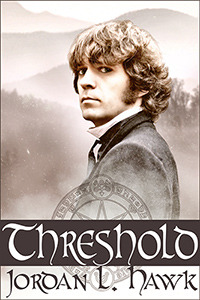
Two authors kicking ass and taking names in the genre are the aforementioned K.J. Charles and Jordan L. Hawk. Over the past two months, I have been mainlining every book of theirs I could get my hands on, and just when I thought I couldn’t get a bigger buzz off these gals, it turns out they wrote a book together, combining both pairs of characters. Closest thing to literary nirvana since the third Adrien English mystery? Signs point to yes.

Here are the deets you need to know:

17730586 18656381

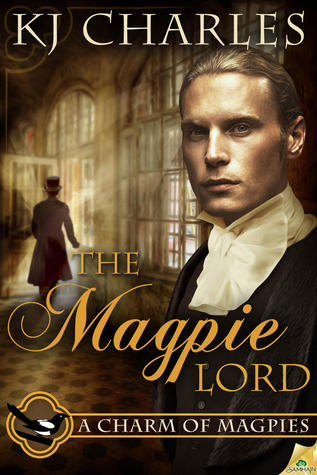
K.J. Charles is a self-described “editor and writer who blogs about life on both sides of the publishing fence.” She currently has two historical supernatural series going, her Charm of Magpies series and the Secret Casebook of Simon Feximal series of shorts. Her Stephen Day from the Magpie series is one of the most unique, fascinating, and endearing characters I’ve encountered in a good long while—not that his romantic foil, Lucien Vaudrey, is by any means the lesser of the pair. Their backstories and their personalities are expertly contrasted; the dance they perform around each other, and eventually together, is as compelling as the events that endanger them at every turn. They are one of those couples that seem impossible on paper, but in life make perfect sense.

All I’ll say about period accuracy and detail is that I bow before her ability to conjure up the past.

Ms. Charles is also not afraid to raise the stakes as high as they can go. The danger in her books is not just real, not just potentially fatal, but the stuff of night terrors and childhood horrors. It’s a wonder her two protagonists haven’t gone mad from the living of these vicious otherworldly episodes. I’m not often genuinely scared reading M/M books, but I have been known to keep the lights as bright as possible and cuddle up with my doggy when reading these. I have been haunted by them, in more ways than one.

16128152 17840306

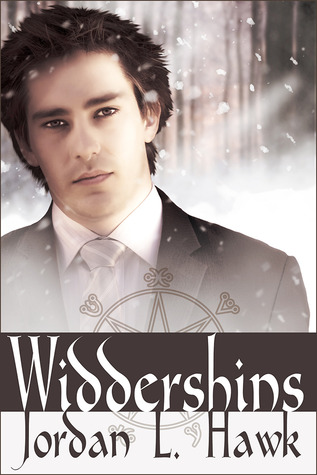
The same could be said of Jordan L. Hawk’s Whyborne and Griffin series. They are the American equivalent of Crane and Day (or Feximal and Caldwell, take your pick), living in the Hellmouth-esque seaside town of Widdershins, Massachusetts. Whyborne and Griffin are more of an obvious match as a couple, but that doesn’t make their meeting and subsequent courtship any less enthralling, especially as it involves undercover missions, a grimoire written in an arcane language, cults, sorcery, and the end of the world. Oh, and one of the strongest female protagonists in the M/M cannon in the dashing and cutthroat Christine.

I confess that Whyborne’s “child of wealth and repression who feels ostracized from his family and the world due to his bookishness, proclivities, and desire to take the road less travelled” struck a chord in me (for obvious, semi-autobiographical reasons). But I especially admire the way Ms. Hawk never lets Whyborne or Griffin (who has his own set of issues) wholly recover from their personal challenges and insecurities. They grow, little by little, inch by inch, over the course of the first four novels, but these changes and victories are hard-won, and ready to beat them back down at every turn. She also marries their supernatural investigations to their inner turmoil, so the case itself affects them on a spiritual and psychological level.

If the love story is especially involving, the supernatural elements are especially icky. There are scenes in these books that, excuse my French, grossed me the fuck out, and also inspired me to make like a Dalek and exterminate every last creepy crawly lurking in the corners of my apartment.

20880073

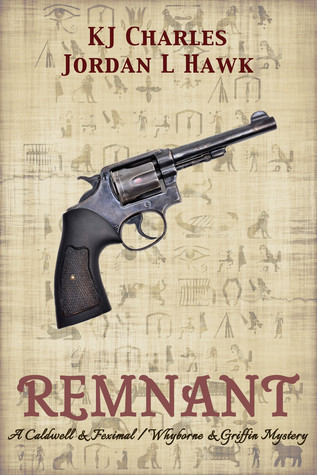
The apotheosis of their talents occurs in Remnant, where Simon Feximal and Robert Caldwell meet Whyborne and Griffin. Bickering and flirtation, as well as the hunt for a serial killer sorcerer, ensue.

Really, what more reason do you need to gorge on these delectable books? I promise, you’ll be thoroughly slaked and not gain a pound. That’s my kind of feast.

Cheers,
-Selina